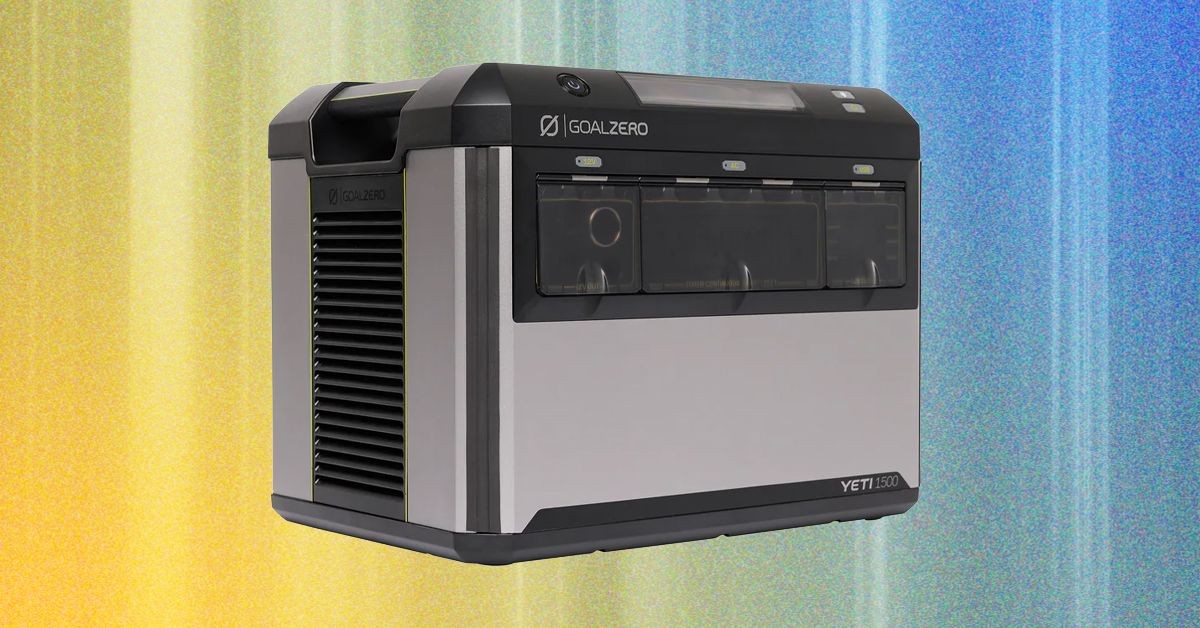
For overlanders, van lifers, and remote workers, the portable power station is no longer a luxury—it is the backbone of mobile independence. Whether you are running a Starlink terminal, powering a portable fridge, or charging laptops for a day’s work, you need a system that is both powerful enough to handle residential appliances and rugged enough to survive the road.
The latest iteration of the Goal Zero Yeti 1500 addresses the two biggest historical complaints about portable power stations: durability and battery longevity. By switching to lithium iron phosphate (LiFePO4) chemistry and reinforcing the chassis with aluminum, Goal Zero has created a device that bridges the gap between fragile consumer electronics and heavy-duty industrial equipment.
Built for the Bounce Test
The primary failure point for most portable power stations is not the battery, but the casing. Plastic housings crack under constant vibration, ports clog with dust, and internal solder joints can fatigue over time—a common issue for those navigating rough terrain like Chaco Canyon or remote dirt tracks.
The new Yeti 1500 changes this dynamic. Unlike its predecessors and most competitors, the unit’s exterior is primarily aluminum, offering significantly higher resistance to vibration and impact. While it retains some plastic vent screens, the overall construction is robust. In real-world testing involving two weeks of travel on unpaved roads in New Mexico and Arizona, the unit showed no signs of wear, proving it can withstand the rigors of full-time overlanding.
The Chemistry Upgrade: LiFePO4 vs. Lithium Polymer
The most significant technical improvement in this 2026 model is the switch from lithium polymer (LiPo) to lithium iron phosphate (LiFePO4) battery chemistry.
- Longevity: LiFePO4 batteries offer a much longer cycle life. Goal Zero rates the Yeti 1500 for 4,000 charge cycles down to 80% capacity. In contrast, older lithium polymer models typically degrade much faster.
- Safety and Stability: LiFePO4 is chemically more stable, making it less prone to thermal runaway and safer for long-term storage.
- Temperature Performance: This chemistry performs better in both extreme heat and cold. However, users should note that the Yeti 1500 cannot be charged below freezing. While the battery can discharge in the cold, charging requires temperatures above 32°F (0°C). For winter camping, an external heating pad may be necessary to warm the unit before charging.
While LiFePO4 has slightly lower energy density than lithium polymer (meaning the unit is heavier for the same watt-hours), the trade-off in lifespan and safety makes it the superior choice for long-term users.
Power Output and Connectivity
The Yeti 1500 is designed as a true all-in-one solution, eliminating the need for separate inverters or charge controllers. Its output capabilities are comprehensive:
- AC Power: Four outlets provide 2,000 watts of continuous power with a surge capacity of 3,600 watts. This is sufficient to run a full-size residential refrigerator during a power outage or start high-draw appliances.
- High-Speed USB: A new 140-watt USB-C port allows for fast charging of modern laptops (such as Dell or MacBook Pro models) and other high-wattage devices. Additional ports include a 60W USB-C, two 30W USB-C, and two 18W USB-A ports.
- 12-Volt Integration: This is where the Yeti 1500 distinguishes itself from competitors. It features a 30-amp 12-volt output, which is rare in this class. This allows the power station to integrate directly into a van’s or RV’s 12V distribution panel, powering lights, water pumps, and ventilation systems without needing additional converters. It also includes standard Anderson connectors and a cigarette-lighter-style outlet.
Charging Flexibility
Recharging the 1.5 kWh battery is fast and flexible:
- AC Wall Power: The unit charges at up to 1,800 watts, reaching 100% in just over an hour. A built-in switch allows users to limit input to 1,500 watts, which is useful for campground pedestals that may not handle the higher draw.
- Solar Power: The system supports up to 900 watts of solar input. It features both 8mm and HPP inputs, compatible with Goal Zero panels and third-party options via adapters.
- Ground Lug: A rear ground lug allows for semi-permanent installations in vehicles or tiny homes, ensuring electrical safety and stability.
Smart Management via App
Control is managed through the Goal Zero app, which connects via Bluetooth (direct) or Wi-Fi (networked). The Bluetooth connection is particularly useful for off-grid users without consistent internet access. The app allows users to:
* Toggle individual output types on or off.
* Monitor charge state and power draw by port type.
* Select from four different charging profiles.
* Eliminate phantom drain: Users can remotely shut off 12V outputs overnight, preventing small loads from slowly draining the battery while sleeping.
While the app’s historical data features are more limited in direct Bluetooth mode, its core functionality for daily management is reliable and essential for energy conservation.
Competitive Landscape: Why It Stands Out
In a market crowded with options, the Yeti 1500 holds a unique position. Competitors like Jackery offer similar 1500-watt-hour models, but they lack the high-wattage USB-C charging and, crucially, the 30-amp 12V output. Bluetti’s Elite 200 is a close rival in capacity but also lacks the high-amp 12V port. To get similar 12V integration from Bluetti, users must step up to the AC200MAX, which is significantly larger, heavier, and more expensive, while still capping USB output at 100W.
The Yeti 1500 remains one of the few units that successfully combines high power output, advanced 12V integration, and rugged durability in a single, portable package.
Conclusion
The 2026 Goal Zero Yeti 1500 is not just an incremental update; it is a strategic evolution designed for serious off-grid users. By adopting LiFePO4 chemistry for longevity and aluminum construction for durability, it solves the reliability issues that have plagued earlier generations. For anyone needing a power source that can function as both a home backup and a van life centerpiece, it offers unmatched features at its size and price point.