The “Golden Age of Radio” died in the ’50s they say. Television killed it. Or so the story goes. But let’s pause for a second. TV used radio signals too. And right now? Radio is hiding everywhere. Your car radio, yes. But your phone streams music via radio waves from a cell tower. Your GPS is running on radio. So is your Wi-Fi. Your Bluetooth headset? Radio waves.
Radio waves are electromagnetic radiation. Same family as visible light, really. But they sit at the bottom of the spectrum. Low frequency. Low energy. That means they’re harmless to humans. X-rays are dangerous because they pack high-energy punches. Radio waves? They breeze through walls and travel vast distances. It is why wireless communication exists. It is relevant. More than ever, actually.
You can build a transmitter and a receiver at home. Simple supplies. Good excuse to mess around with physics. Let’s do it.
What Is an Electromagnetic Wave, Really?
Take a string. Tie one end to a doorknob. Hold the other. Shake it. Up and down. You see the ripple? That is a wave. Energy moves. Matter doesn’t. The string just vibes.
Remove the string. Now you are just shaking your hand at a wall. A bit sad. Pointless. Waves need a medium. Ocean waves need water. Sound needs air. Space is silent because there is nothing for the sound to travel through.
But electrons are tricky. Shake an electric charge—say, an electron. It creates an oscillating electric field. That is a wave of sorts. But Maxwell’s equations get weird here. A changing electric field creates a changing magnetic field. Which creates another electric field. A chain reaction. Self-perpetuating. The electric and magnetic fields become the medium for each other.
Electromagnetic radiation. Light, technically. Yes, radio waves are light. They don’t need water or air or string. They fly through empty space at the speed of light.
A Piezoelectric Radio Transmitter
Time to make some waves. You need a lighter. Specifically, the grill kind. The long tube with the trigger. Inside is a piezoelectric crystal. Hit it hard and it deforms. Instantly produces high voltage. A spark follows.
Cut one open. You can do this carefully. See the crystal?
The trigger has a hammer that slams it. Voltage spikes. Usually that creates a spark for fire. For us? We want the voltage. Not the flame. The voltage creates an electric field. This field pushes on free charges already floating in the air. Electrons, ions, whatever. They accelerate. Hit an air molecule. Knock out more electrons. An electron avalanche.
Accelerating charges are the key. They create a changing electric field. Which makes a changing magnetic field. Boom. Electromagnetic wave radiates out. Oh, the nitrogen and oxygen atoms get excited too. They emit light when they calm down. That’s why you see a spark. The visible proof.
Try it. Get an AM radio. Tune it to dead space. No stations. Hold the lighter near the antenna. Pull the trigger. Click. Hear it? You just received a signal. You built a radio transmitter out of barbecue gear.
The Coherer Receiver
Now for the reception end. We need a detector. Grab a glass cup. Nonmetal. Essential. Aluminum foil. Crumple it into little balls. Toss them in the cup. A strip of foil over the rim helps connect the circuit.
You’ll need a button cell battery. And an LED.
Here is the wiring trick: LED legs matter. The long one is positive. Connect it to the positive terminal of your battery. If you mix this up, the light won’t come on. It never does.
Why crumpled balls? Aluminum conducts well, but not perfectly. When foil sits in air, it oxidizes. That thin oxide layer adds resistance. Tiny contact points between the balls add more. The circuit is stuck. Not enough current to light the LED. It sits there, dark and quiet.
Until the wave hits.
That radio wave from your lighter carries an electric field. When it slams into the gap between two aluminum balls, something breaks. The oxidation layer fractures. The resistance drops. Connection improves. Suddenly, current flows.
The LED lights up. Click. You detected radio.
This is not just a hack. It is called a coherer. A real historical device. Guglielmo Marconi used one for the wireless telegraph in the 1190s. He used nickel and silver shavings though. Filings clinging together—cohering—to allow current flow. He heard a click. Same principle. Different century.
Radio Days
Marconi’s tech could send dots and dashes. Morse code. Only. Short bursts. Long bursts. No voice. No music yet. Just text across the ocean.
It changed the world. In 1912, the Titanic used this system to send SOS. Radio saved 700 lives that night. Not bad for clicking switches and shining lights through the void.
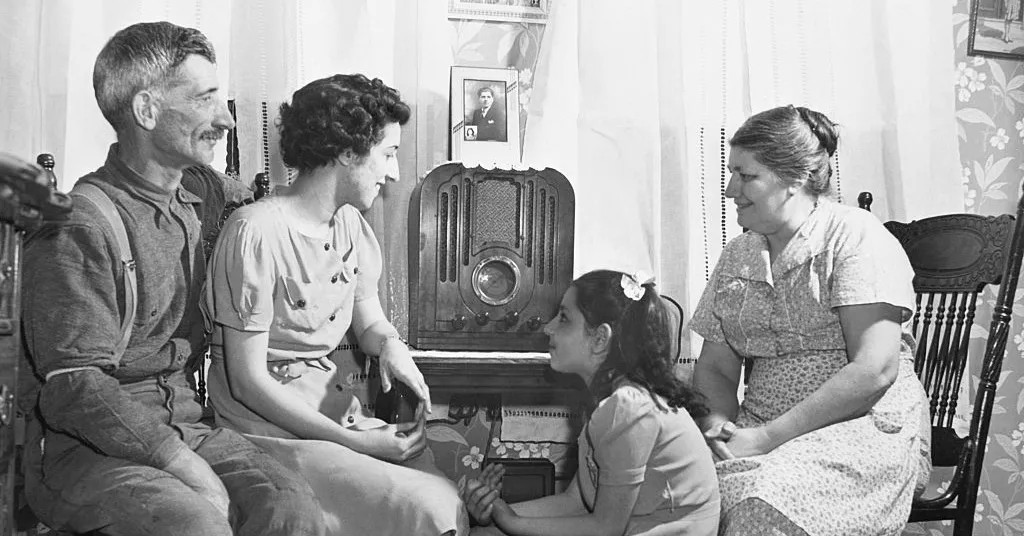
Voice came later. Vacuum tubes made continuous signals possible. By the 1920s, radios were furniture. The center of the living room. The heartbeat of modern life.
And yet. You did this with foil and a lighter. One channel though. One signal. If everyone transmitted at once, chaos. Total noise. Useless for cell phones.
Maybe radio waves don’t need to be complex. Just pure energy. Bouncing around the room.
Are we listening anymore? Or just streaming? 📻