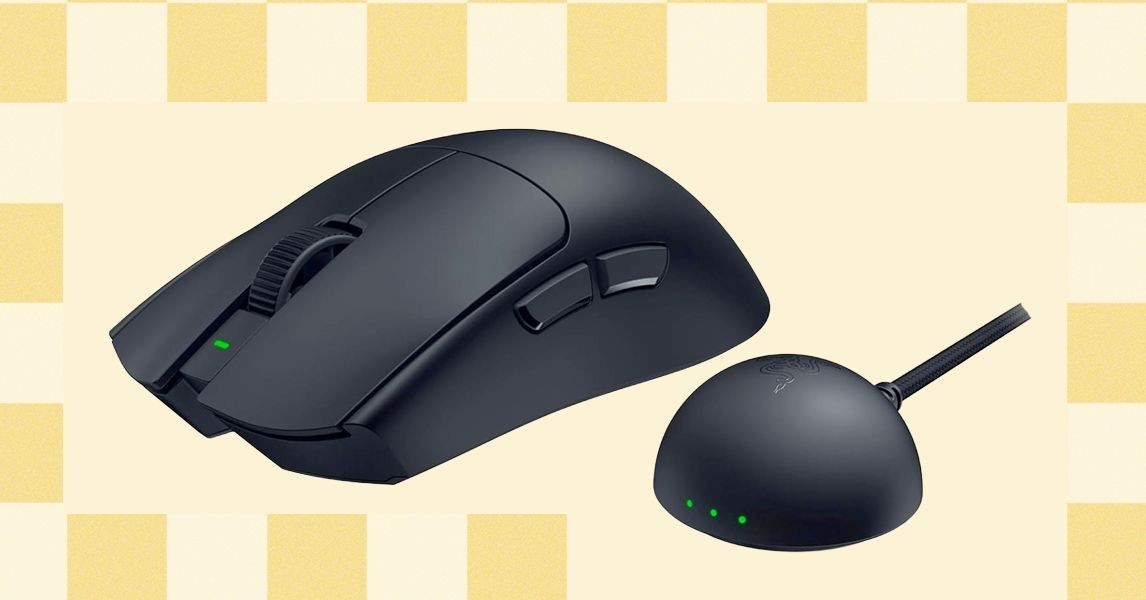
The Razer Viper line has dominated the competitive mouse market since 2019. Ambidextrous. Fast. Expensive but worth it. Now they’re here with the V4 Pro.
Did it change everything?
No. No new polling record. No DPI shock factor. But they squeezed the orange for more juice. Latency is lower. Consistency is tighter. The goal wasn’t innovation—it was refinement.
Don’t upgrade if you have the V3. The gains are there, yes. They are real numbers on a spreadsheet. But your wrist won’t notice the delta enough to justify the cash. Unless you’re using something ancient? Then sure. Go ahead.
It Looks Exactly the Same
Stare at a V3. Now stare at a V4. Tell them apart.
Good luck. They are clones. Different shade of white, maybe. That’s it. People love to cry about lack of design bravery. They miss the point. The shape works. It has always worked.
Ambidextrous? Mostly.
The palm rest sits comfortably for average hands. Width is standard. Length is standard.
Both sides taper. Easier to lift. Less friction with your mousepad. The left side buttons? Placed perfectly for a palm grip. The right side? Bare. No buttons. It isn’t a true ambidextrous design—those don’t really exist anymore—but lefties are stuck. The main left and right clicks feature Razer’s signature dip. Concave. Familiar.
The clicks changed too. Mechanical switches are dead. Buried. Optical sensors handle the actuation now. The scroll wheel joined the party. Why? Separation of feel and function. In the old days, a good click often meant worse durability. Here, the tactile sensation is independent of the electronics. It is a nice trick.
Short travel. Snap. Loud. No mush. The weight needed to click prevents misclicks without dragging your aim. The optical wheel snaps hard. Distinct steps. Easy to spin fast. Side buttons feel softer. Quieter. Muted.
Under the skin? Lighter. Fifty grams in white. Forty-nine in black. That five-gram cut is small on paper. In game? Huge. The 8,000 Hz polling remains unchanged from the V3. DPI hits 50,000 now—up from 15k. The new hemispherical dongle is prettier. Shows stats.
Flicking feels instant. Snap.
In Counter-Strike 2, the balance holds. It isn’t so light that it drifts away from control. In Helldivers 2, you can pivot and flee from fire. Or engage. If you’re brave enough.
The old hyperpolling dongle had one LED. This one is a dome. Three lights. Four data points. Connection. Battery. Polling. DPI. Colors mean things. I cared most about battery and signal. The rest is window dressing, really.
The Tech Underneath
Frame Sync is the big word. It matches the optical sensor to the PC’s polling rate. Desync is the enemy of reaction time. Frame Sync kills it.
Click latency averages 0.204 milliseconds. Motion latency? 0.36 milliseconds.
Do you feel that? No. You’re human. Your reflexes take over 100 milliseconds. Even pros aren’t faster than that. So why does it matter? It reduces the possibility of error. The floor is raised. In aim trainers, it looked perfect. The error wasn’t in the mouse. It was in my hand. Always has been.
Synapse software lets you tweak everything. Not just DPI. You can change how far the sensor tracks. You can warp the sensitivity curves.
I live for the dynamic sensitivity adjustment. It makes rapid flicks land where your eye wants them. Takes time to set up. Worth every minute in Valorant.
Glass surfaces? Yes, it works on glass now. Frost or clear. Doesn’t matter. Mouse rotation? Rotate the input if your wrist angles weird.
Battery life? Better. Way better. The V3 choked at 8 kHz (17 hours). The V4 lasts 45. At 1 kHz? Up to 180 hours. Almost double the last generation. Beats the DeathAdder. Beats the Logitech Pros. Charging is fast. You can play, plug it in, keep playing.
For work? Eh. It’ll do. Don’t expect Logitech MX Master comfort. If your wrist hurts after eight hours, this isn’t the fix. Go buy an ergonomic mouse. Protect your future self. Start now.
Brittle Plastic and Missing Bluetooth
Making a mouse this light is engineering alchemy. It feels rigid. Sturdy. No creaks. No wobbles. But look inside.
Plastic everywhere. Thin. Brittle. The whole thing holds together via tension and clips.
Can you repair it? Yes. Screws hold it. But if you replace a switch and crack a brace? Goodbye, warranty. Goodbye, mouse. It’s the cost of ultralight design. Everything is interconnected. Break one thing, you might break the structural integrity of the shell.
One big omission remains. After four generations. No Bluetooth.
Razer says they stripped weight for esports glory. Fine. But now you can’t use this mouse with your laptop on the couch. Or your phone. Just USB. Wired or 2.4GHz only. It limits where you take the hardware. A Bluetooth chip would’ve added negligible weight compared to other sacrifices they didn’t make.
Still.
If you’re cross-shopping, don’t buy the V3 unless it’s dirt cheap. The V4 improves everything that actually matters. Latency. Battery. Weight. Feel.
It’s a tiny upgrade for existing owners. It’s a solid step forward for anyone else. Just know what you’re getting. A refined tool. Not a revolution.