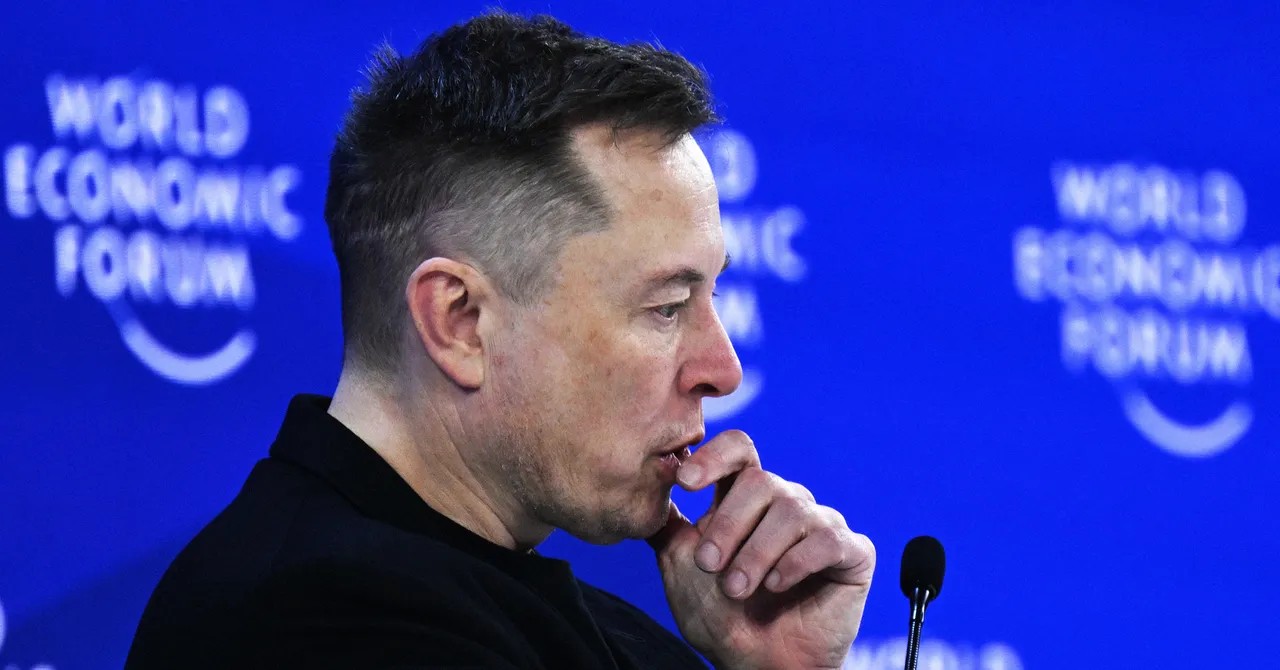
Elon Musk, known for ambitious ventures and bold pronouncements, recently shared a series of predictions at the World Economic Forum in Davos. While his entrepreneurial success is undeniable, his track record on forecasting the future is considerably less reliable. This pattern raises a critical question: why do these predictions matter, and what do they reveal about the current trajectory of technology and business? The answer lies in Musk’s influence—his companies span multiple industries, meaning even speculative statements can impact global markets.
The Optimist’s Paradox
Musk opened his Davos appearance by acknowledging his own tendency to be optimistically wrong rather than pessimistically right. This sentiment, though lighthearted, reflects a broader trend in tech: a willingness to overpromise and iterate, sometimes at the expense of accuracy. His companies, including Tesla, SpaceX, X, xAI, and Neuralink, operate at the forefront of disruptive innovation, making even casual forecasts potentially market-moving.
Key Predictions & Their Realities
Musk laid out several key predictions during his talk. Here’s a breakdown:
Extraterrestrial Life: Highly Unlikely
Musk asserted that, with 9,000 satellites in orbit, no alien contact has been made. This reinforces his belief that life and consciousness are exceptionally rare. While seemingly dismissive, this statement aligns with current scientific consensus: the universe is vast, and evidence of extraterrestrial life remains elusive.
Humanoid Robots: Ubiquitous by 2027?
Musk doubled down on his claims about Tesla’s Optimus robot, predicting its widespread availability by 2027. However, the project faces significant technical hurdles, particularly in hand functionality. This mirrors a common pattern: Musk sets aggressive timelines that often slip, yet the aspirational goals drive development forward.
Robotaxis: “Very Widespread” by 2026?
Despite launching a limited robotaxi service in Austin with human oversight, Musk now claims full deployment across the US by late 2026. This is ambitious given existing regulatory constraints and technological limitations. Tesla is likely to target states with looser regulations first (Arizona, Florida, Nevada), but nationwide adoption remains distant.
Human Aging: A “Solvable Problem”?
Musk acknowledged limited personal research into aging but boldly predicted a solution. This reflects Silicon Valley’s growing interest in longevity, though scientific breakthroughs are far from guaranteed. The statement is more aspirational than grounded in concrete evidence.
SpaceX Reusability: Fully Operational by 2024?
SpaceX has made progress on Starship, but full reusability by year-end remains uncertain. Musk’s past deadlines for crewed Mars missions and orbital launches were missed, indicating a pattern of optimistic overestimation.
AI Supremacy: Imminent?
Musk predicted AI surpassing human intelligence this year and collective human intelligence by 2035. This aligns with current AI development trends, though the exact timeline is debated. He also acknowledged the potential existential risks of unchecked AI growth, reflecting his ongoing concerns about the technology’s future.
The Bigger Picture
Musk’s Davos predictions, while often speculative, highlight the rapid acceleration of technology across multiple domains. His statements serve as both aspirational targets and cautionary tales. The real impact lies not in whether these specific forecasts come true, but in the direction they push innovation and investment. The aggressive timelines and bold claims force action, even if the ultimate outcome differs from the initial vision.
Musk’s pronouncements are a reminder that technology development is rarely linear. Overestimation and setbacks are inevitable, yet the pursuit of ambitious goals remains the engine of progress.