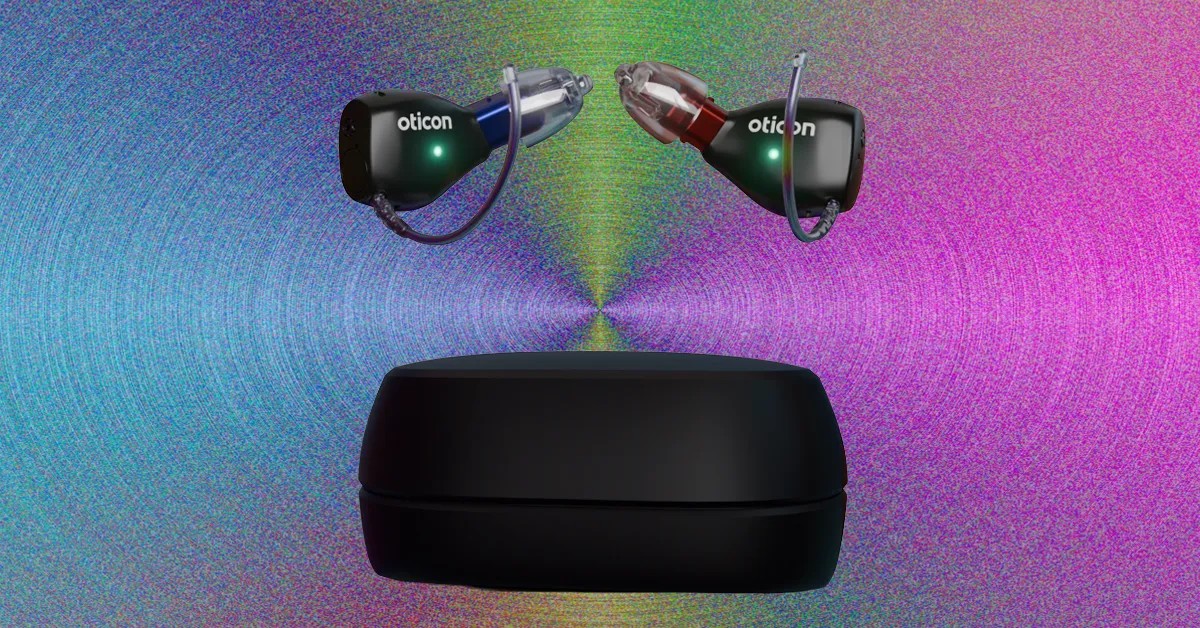
Oticon, a leading hearing technology company, has entered a new market segment with the Zeal, its first in-the-ear (ITE) hearing aid designed for near-invisibility. Unlike previous custom-fit ITE options, the Zeal offers a universal fit, prioritizing discretion over personalization. At just 1.68 grams each, these are among the lightest prescription hearing aids available.
A Focus on Discretion and Size
The primary appeal of the Oticon Zeal lies in its ability to blend seamlessly into the ear canal. The device features a curved wire extension serving both as a retention lock and an antenna, improving connectivity with mobile devices. While this design ensures a secure fit, it also introduces minor discomfort, as the universal fit isn’t always perfect. Users may experience slight wiggling during extended wear, even with the retention lock in place.
Audio Quality and App Integration
Despite its diminutive size, the Zeal delivers impressive audio quality, gently enhancing weaker frequencies without distortion. The Oticon app provides basic equalization options, while audiologists can configure custom environmental programs. Streaming quality is surprisingly good, with a separate equalizer for media playback. However, the Zeal lacks active noise cancellation, making it unsuitable for noisy environments like airplanes or gyms.
The Oticon app is intuitive and includes features like a “find my hearing aids” tool. Pairing with iPhones is seamless, and the Zeal is also compatible with Google’s Fast Pair system on Android and ChromeOS devices, as well as Auracast. The absence of physical controls is compensated by optional tap controls, though many users disable these to avoid accidental activation.
Comfort, Battery Life, and Cost
Long-term comfort is acceptable, though insertion and removal can be tricky due to the device’s small size and the need to manipulate the retention lock. Battery life averages around 14 hours, sufficient for daily use. The included charging case provides three additional charges before requiring a USB-C connection.
The most significant barrier to entry is the price: Oticon Zeal hearing aids typically range from $5,000 to $8,000 per pair. This places them among the most expensive options on the market, with a cost exceeding $1,900 per gram. This reflects the advanced technology and discreet design, but also underscores the financial commitment required for premium hearing solutions.
The Oticon Zeal represents a trade-off between discretion, comfort, and cost. While the device excels in size and audio quality, its universal fit and high price tag may not suit all users.