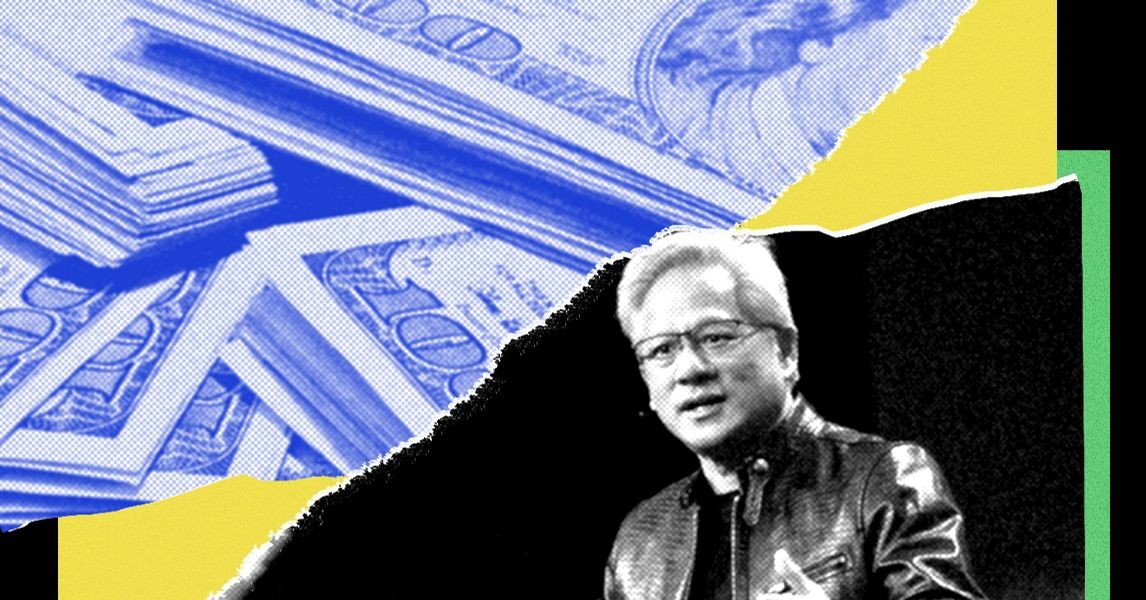
Nvidia is committing $26 billion over the next five years to the development of open-weight artificial intelligence models, a move that positions the chipmaker as a direct competitor to OpenAI and DeepSeek in the rapidly evolving AI landscape. The company’s executives confirmed the investment in interviews, revealing a strategy shift that could further solidify Nvidia’s dominance in the AI hardware market. This investment isn’t merely about chip sales; it’s about controlling the entire AI ecosystem, from the silicon to the software.
The Rise of Open-Source AI
Open-weight models, where the underlying parameters are publicly released, have gained traction as a means to democratize AI development. Unlike closed-source systems controlled by a few tech giants, these models allow anyone to download, modify, and deploy them on their own infrastructure. Nvidia’s decision to invest heavily in this area signals a recognition that open-source is no longer a niche movement but a critical component of the future of AI. The company will also release technical details alongside its models, enabling startups and researchers to build upon Nvidia’s innovations more easily.
Nemotron 3 Super: Nvidia’s Flagship Open Model
Nvidia recently unveiled Nemotron 3 Super, its most advanced open-weight model to date. Featuring 128 billion parameters, it rivals OpenAI’s GPT-OSS in scale, with Nvidia claiming superior performance across multiple benchmarks. The model scored 37 on the Artificial Intelligence Index, outperforming GPT-OSS (33) and competing with top Chinese models. Nvidia further tested Nemotron 3 Super on PinchBench, a new benchmark focused on controlling OpenClaw, where it achieved the highest ranking.
The company also highlighted technical improvements in reasoning, long-context handling, and reinforcement learning responsiveness. This isn’t just about raw processing power; it’s about making AI models more practical and versatile.
A Strategic Response to Global Competition
The move comes as open-source AI development gains momentum, particularly in China. Companies like DeepSeek, Alibaba, Moonshot AI, and MiniMax have released highly competitive open-weight models that are rapidly gaining popularity among researchers and startups worldwide. The growing availability of these models threatens Nvidia’s hardware dominance, as they can be run on alternative chip architectures.
DeepSeek recently released a model trained using a more efficient approach, reducing training costs significantly. The potential for Chinese models to demonstrate superior performance on rival hardware has prompted Nvidia to act decisively.
Nvidia’s Long-Term Vision
Nvidia’s investment isn’t solely defensive. By releasing open models, the company aims to drive demand for its hardware, as training large AI models still requires massive computing power. The company also intends to use open models to improve its own datacenter infrastructure, pushing the boundaries of storage, networking, and overall system performance.
As Bryan Catanzaro, VP of applied deep learning research at Nvidia, stated, the company is “taking open model development much more seriously” and “making a lot of progress.”
The Geopolitical Implications
The rise of open-source AI has geopolitical implications. With the US and China competing for dominance in AI, Nvidia’s investment could help shape the future landscape. While Nvidia emphasizes its global reach, its actions could be interpreted as a strategic move to counter the influence of Chinese models.
Some industry experts warn that a shift towards open innovation in China could harm the US long-term. Nathan Lambert of the Allen Institute for AI suggests the US government should also fund open models to maintain competitiveness.
Nvidia’s $26 billion commitment isn’t just an investment in technology; it’s a bet on the future of AI and a calculated move to retain its position at the forefront of this transformative industry. The company’s dual strategy of open-source development and hardware dominance ensures it will remain a critical player in the global AI ecosystem for years to come.