


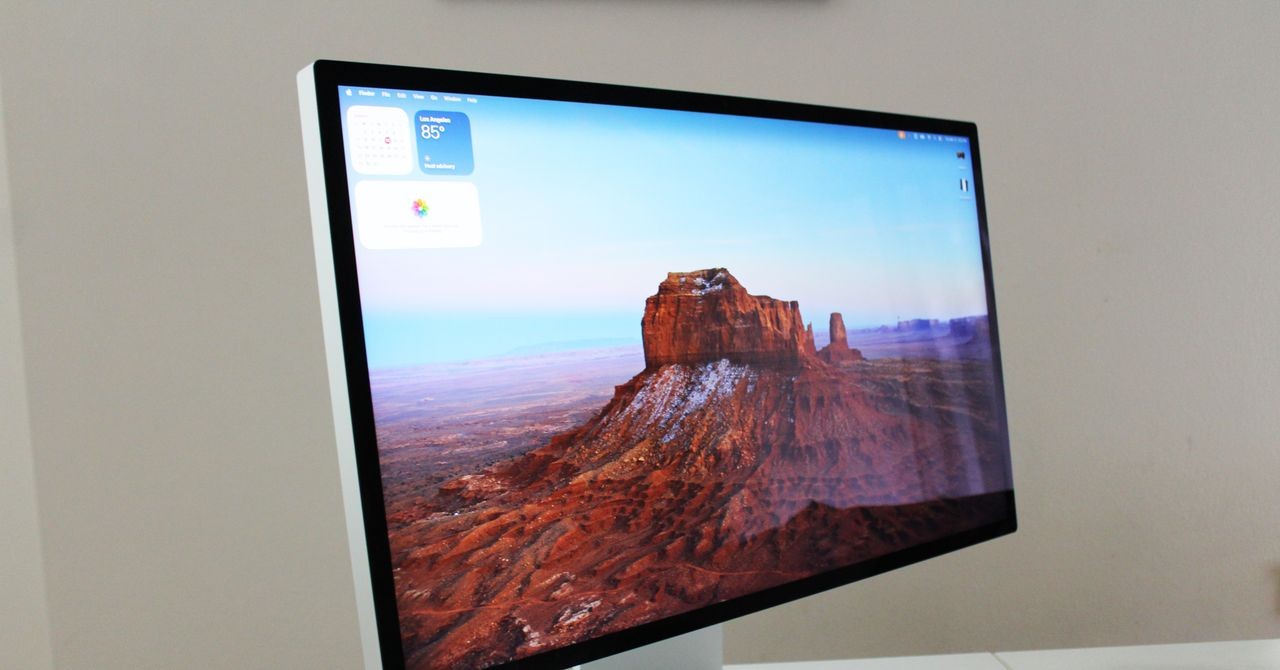
Apple’s latest Studio Display XDR is a niche product aimed at professionals who demand top-tier HDR performance, but its high price and specific limitations make it an unusual purchase for most users. The monitor delivers exceptional brightness and contrast, boasting 2,304 dimming zones – a significant leap from its predecessor, the Pro Display XDR, which had 576. This allows for minimal blooming and haloing effects, bringing it closer to OLED quality, though not quite matching it.
The HDR Advantage
The key selling point of the Studio Display XDR is its HDR capability. Unlike many monitors that market HDR without the underlying technology to support it, Apple’s display achieves an impressive 1,905 nits of peak brightness. This makes it the brightest computer monitor tested to date, surpassing competitors like the Dell 32 Plus QD-OLED, which maxes out at 946 nits in a small window. The increased dimming zones and brightness levels result in a significantly enhanced HDR experience, particularly for content creators working with high dynamic range material.
Trade-offs and Limitations
Despite its strengths, the Studio Display XDR is not without drawbacks. Its 27-inch size and 5K resolution are a step down from the original Pro Display XDR’s 32-inch, 6K configuration, a compromise made to accommodate the increased density of dimming zones. The monitor also has compatibility restrictions: it only works with Apple silicon Macs and limits refresh rates to 60Hz on older M1 Pro, Max, and Ultra chips.
Further complicating matters, the monitor’s single USB-C port delivers only 96 watts of power, which may not be sufficient for high-performance MacBooks under heavy load. The price remains high at $1,599 for the base model, placing it firmly in the luxury category.
A Niche Product in a Changing Market
The Studio Display XDR’s HDR performance is impressive, but the market has evolved since the Pro Display XDR’s launch in 2019. OLED and Mini-LED monitors have become more affordable and competitive, diminishing the XDR’s unique advantage. While the monitor excels in HDR, it doesn’t represent a disruptive force, and many users may still prefer a 32-inch option or a more budget-friendly alternative.
The Studio Display XDR delivers exceptional HDR performance, but its niche appeal and high price mean it won’t replace mainstream monitors anytime soon. It is a premium option for professionals who prioritize HDR above all else, but the majority of users will likely find better value elsewhere.


