


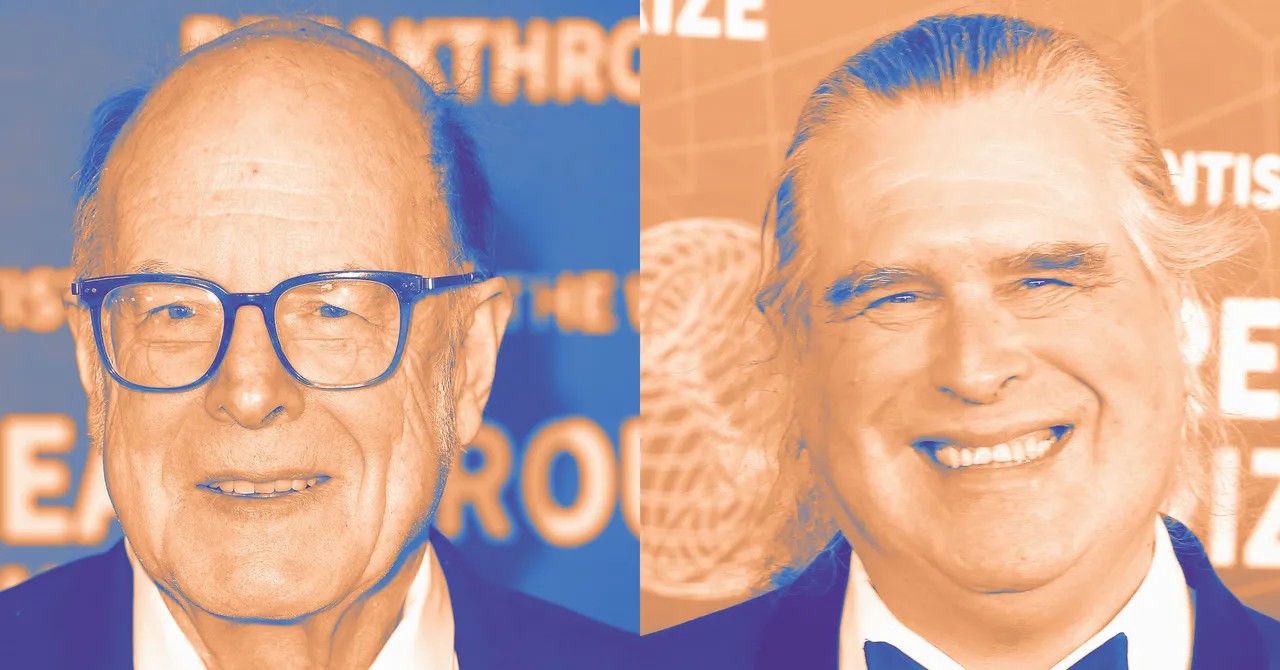
The race to build practical quantum computers is now a global obsession, with tech giants and startups pouring billions into the field. Yet, the very foundations of this revolution were laid decades ago by two scientists who met for a chance discussion in the ocean. Charles Bennett and Gilles Brassard have been awarded the ACM A.M. Turing Award, the highest honor in computer science, for their pivotal work in creating quantum information theory. Their breakthrough transformed quantum mechanics from a perceived nuisance into the cornerstone of secure communication and, ultimately, the future of computation.
From Noise to Opportunity: Bridging Physics and Computer Science
Until the late 1970s, computer science largely ignored the bizarre rules of the quantum world, treating quantum effects as mere imperfections in electronics. However, Bennett and Brassard recognized that these “imperfections” – such as quantum coin-tossing and entanglement – could be harnessed for revolutionary purposes.
“People thought of quantum mechanics as a nuisance,” explains Bennett, recalling the early days of chip manufacturing. The pair discovered methods to turn these perceived handicaps into a powerful tool. Their work emerged from a surprising connection: a shared idea about using quantum cryptography to create uncounterfeitable digital money, predating even modern cryptocurrency concepts by decades.
The Accidental Meeting That Changed Everything
The story of their collaboration is equally improbable. Bennett, seeking a fresh direction after leaving academic publishing, encountered Brassard at a conference in 1979. The encounter took place in the Atlantic Ocean off the coast of Puerto Rico. Brassard recalls being cornered mid-swim by a stranger pitching a radical idea: using quantum mechanics for unbreakable banking notes. Intrigued despite his initial skepticism, Brassard joined forces with Bennett, leading to the publication of BB84, a groundbreaking protocol for quantum cryptography.
The BB84 protocol became the foundation of quantum information theory, transforming the quantum realm from an obstacle into a potential solution for secure communication. As Yannis Ioannidis, president of ACM, stated, “Bennett and Brassard fundamentally changed our understanding of information itself.”
Beyond Encryption: The Rise of Quantum Computing
While their initial work focused on cryptography, Bennett and Brassard’s insights paved the way for quantum computing. Though they didn’t directly invent the field, their contributions were essential. Richard Feynman later argued that nature itself is quantum, implying that certain computations would inevitably require quantum computers. Bennett and Brassard jumped into this new effort, with Brassard designing the first quantum circuit for teleportation—a concept now deeply ingrained in quantum lore.
The pair continue to work on the forefront of quantum science: Bennett remains at IBM, while Brassard teaches at the Université de Montréal. Their legacy is intertwined with the future of technology.
“Quantum information is like the information in a dream,” Bennett wrote. “Attempting to describe your dream to someone else changes your memory of it, so you begin to forget the dream and remember only what you said about it.”
Despite the hype surrounding billion-dollar quantum labs, the original proof-of-concept for their theory sits in Bennett’s office – a makeshift device built from early IBM PC parts. The National Museum of Cryptology declined to take it, preferring only “obsolete cryptographic techniques.” To Bennett, this was a sign of success.
The work of Bennett and Brassard is not just historical; it is fundamental to the quantum revolution unfolding today. Their theories, born from an unlikely meeting in the ocean, continue to shape the future of information and computation.


