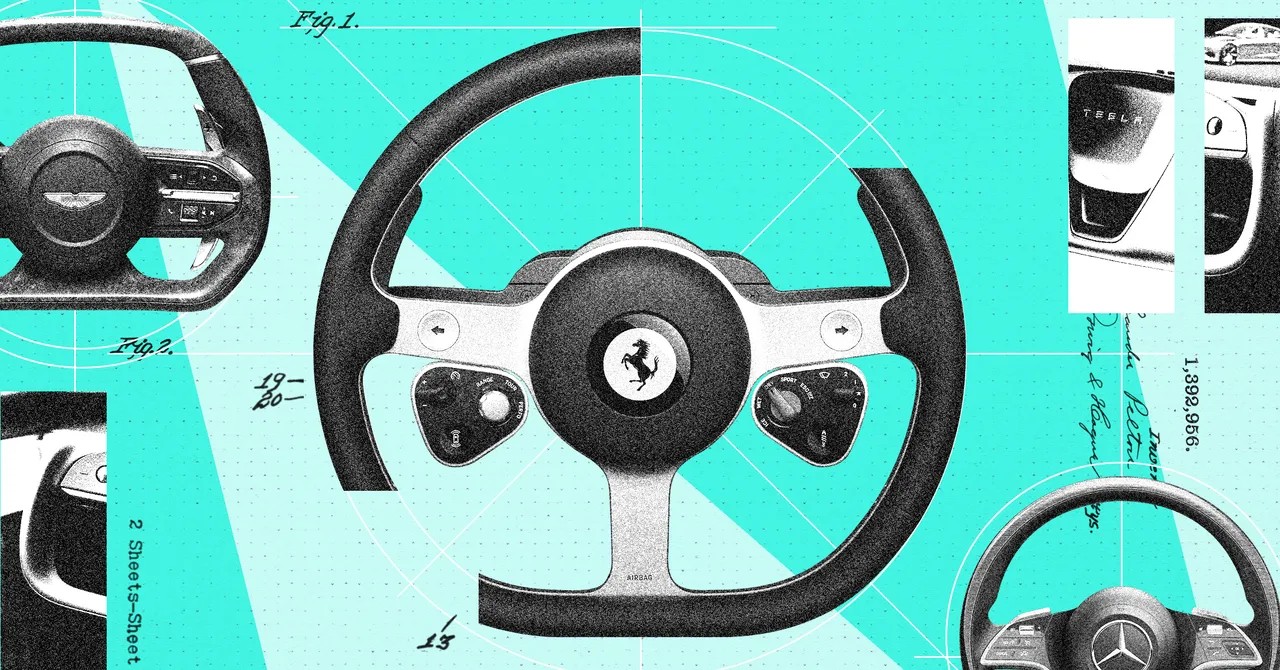
The steering wheel: a simple circle with spokes, a space for an airbag, and maybe a few buttons. Easy, right? Wrong. Automakers spend years, going through dozens of designs, because crafting a functional and aesthetically pleasing steering wheel is one of the most difficult parts of car design. It’s the primary point of contact between driver and machine, shaping the entire driving experience. Get it wrong, and no amount of luxury or performance can compensate.
The First Touch Matters Most
For decades, automakers have meticulously refined steering wheel designs, understanding that it’s the first thing you touch when entering a vehicle. It dictates comfort, usability, and emotional connection. A poorly designed wheel can ruin an otherwise exceptional car. This is why design teams often cycle through over 20 iterations, relying on 3D printing, sketches, and endless analysis to land on the perfect form.
The Wheel in Flux: Regulation and Reassessment
The steering wheel is currently undergoing a period of reevaluation, driven by both safety concerns and design trends. China recently banned “yoke” steering wheels – those resembling fighter jet controls, like in Tesla and Lexus models – citing crash risks. Meanwhile, Audi CEO Gernot Döllner announced a drastic cut in customization options, aiming to consolidate over 100 steering wheel variants down to just three or four.
This shift coincides with a renewed appreciation for tactile controls, exemplified by Jony Ive’s work with Ferrari. After years of automotive minimalism copying Apple’s buttonless designs, the industry is now realizing physical switches offer better feedback and usability. Ferrari, inspired by Ive’s design, is even retrofitting older models with real buttons instead of frustrating haptic pads.
From Tiller to Touch: A Historical Perspective
The steering wheel wasn’t always standard. The first cars, like Karl Benz’s 1885 Patent-Motorwagen, used a tiller system resembling a boat’s rudder. It took nine more years for Alfred Vacheron to introduce the first steering wheel in 1894, and just four years after that, Panhard made it standard equipment. Since then, the wheel has remained a constant, though its design has evolved.
The Perfectionist’s Test: Design as Recruitment
Mercedes-Benz interior design creative director Hans-Peter Wunderlich considers the steering wheel the ultimate test for potential designers. If a candidate can sketch a perfect wheel, they’re likely capable of designing an entire interior. Wunderlich emphasizes the challenge: “A steering wheel is really the most challenging and difficult element to sculpt.”
The Science of Ergonomics and Form
Designing a steering wheel isn’t just about aesthetics. It’s a science of ergonomics, factoring in grip points, airbag deployment, and even the curvature of the rim. Mercedes’ design team works closely with ergonomics specialists, ensuring the wheel feels natural and secure in the hands. The rim itself isn’t round in cross-section; instead, it’s sculpted to optimize grip at different hand positions.
The Return of Tactile Feedback
The automotive industry’s brief flirtation with touch-capacitive buttons is ending. Audi’s Marwan Khiat admits the industry chased a cheaper, less effective solution inspired by Apple. The company’s new Concept C steering wheel will revert to physical buttons, offering tactile feedback and reliability. Ferrari’s Benedetto Vigna even acknowledges that touch-capacitive buttons were a “supplier’s advantage,” not a driver’s benefit.
The Future: Folding Wheels and Autonomous Control
The future of the steering wheel is uncertain. As autonomous driving advances, some companies are exploring retractable designs, like Autoliv’s foldable wheel. These systems adapt the airbag deployment based on whether the car is in manual or self-driving mode. However, even with full autonomy, retaining a physical interface may be crucial for driver trust and control.
The relationship between driver and machine will need to be reframed when the steering wheel disappears. How much trust will be extended, how much agency will remain? These questions will define the next generation of automotive design.
The steering wheel, despite its simplicity in concept, represents a complex interplay of ergonomics, safety, and emotional connection. Its future remains uncertain, but one thing is clear: the human touch will continue to shape automotive design for years to come.