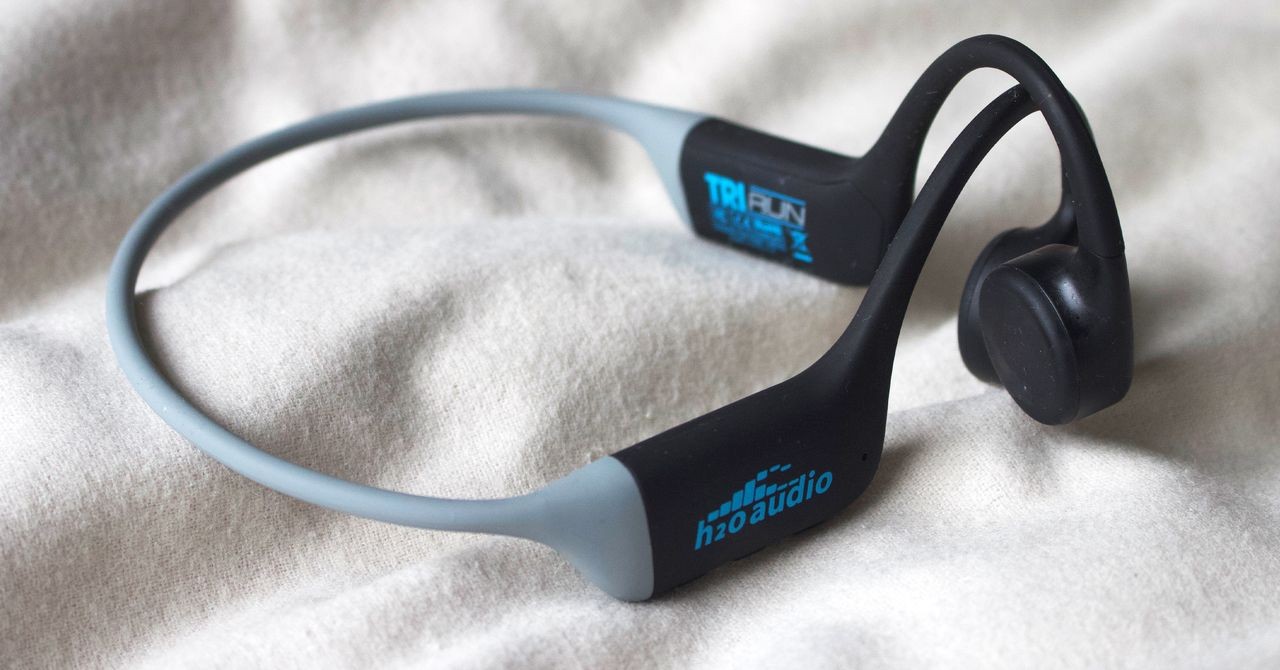
While Shokz currently dominates the bone-conduction market, there is a growing demand for more affordable alternatives. H2O Audio, a brand traditionally known for its specialized swimming headphones, is attempting to break into the mainstream fitness market with the Tri Run.
Positioned as a sub-$100 option for runners and cyclists, the Tri Run aims to provide situational awareness through bone-conduction technology. However, while the hardware excels in comfort and durability, the audio performance leaves much to be desired.
Design and Comfort: Built for Movement
The Tri Run utilizes a classic bone-conduction architecture: a slim, flexible titanium and silicone neckband that rests on the ears and wraps around the back of the head. For athletes, weight distribution is the most critical factor in long-term comfort, and H2O Audio has largely mastered this.
- Secure Fit: Weighing in at just 1.3 oz, the headphones feel balanced. They remain snug during high-intensity movement without requiring constant manual readjustment.
- Intuitive Controls: The device features physical buttons located on the underside of the frame. These allow for easy volume adjustment, track skipping, and playback control, even while in motion.
- Durability: Despite the “Tri” branding, these are not for swimming (as Bluetooth does not function underwater), but they carry an IPX8 waterproof rating. This makes them highly resistant to heavy rain and intense sweat, a vital feature for outdoor endurance athletes.
Audio Performance: The Bone-Conduction Trade-off
It is important to note that bone conduction is fundamentally different from traditional headphones. Rather than using speakers to move air into your ear canal, these vibrate the cheekbones to send sound directly to the inner ear. This keeps your ears “open” to ambient noise—a critical safety feature for road runners.
However, the Tri Run struggles to deliver high-quality audio within this format:
* Sound Profile: The audio is functional but uninspiring. The bass lacks punch and feels “muddy,” while the treble can sound grainy.
* The Sweet Spot: These headphones are best utilized for podcasts and audiobooks, where vocal clarity is more important than musical depth.
* Environmental Challenges: In loud environments—such as running near a busy highway—the audio struggles to compete with wind and traffic noise. When pushed to maximum volume to compensate, the user may experience a distracting “tickle” sensation on the skin caused by the vibrations.
Connectivity and Battery Life
In terms of technical utility, the Tri Run is straightforward but lacks modern conveniences:
1. Pairing: The device connects easily to various platforms, including iPhones, Android devices, and smartwatches. However, unlike more premium models, it lacks multipoint pairing (the ability to connect to two devices at once).
2. Battery Limitations: While the manufacturer quotes a seven-hour battery life, real-world usage at higher volumes drops this to roughly five or six hours.
3. Charging Hurdles: Unlike many competitors that have moved to universal USB-C standards, the Tri Run requires a proprietary charging cable, adding another specific accessory to a user’s kit.
The Verdict: A Competitor in Search of an Edge
The H2O Audio Tri Run succeeds in creating a piece of hardware that is comfortable, waterproof, and reliable for active lifestyles. It solves the physical problem of how to wear headphones while staying aware of one’s surroundings.
However, it struggles to solve the sonic problem. When compared to the Shokz OpenRun—which sits only slightly higher in price—the Tri Run falls behind in sound quality, battery longevity, and feature set. For those seeking a budget-friendly entry into bone conduction, the Tri Run is a viable option, but it is not yet a true disruptor in the market.
Conclusion: The Tri Run is a well-built, comfortable, and highly waterproof option for athletes who prioritize situational awareness over high-fidelity music. However, its mediocre sound quality and proprietary charging make it difficult to recommend over slightly more expensive, more polished competitors.