Preserve everything. Or nothing. Your choice. But honestly, with grocery prices doing whatever they do these days, hoarding surplus food is smart. Grown it? Bought it on a panic sale? Caught a deer? Dehydrating it saves space. It beats freezing. Canning is a chore. Dehydrators are small, quiet, and they turn wet fruit into leather and beef into jerky without taking up a whole counter.
I like apple chips. Crunch. I also make beef jerky. My colleague Lisa Wood Shapiro makes dog treats from sweet potatoes. We ate through pounds of produce to find what actually works. Here is what we liked. And what we didn’t.
Best Overall: Excalibur DH08SCSS13
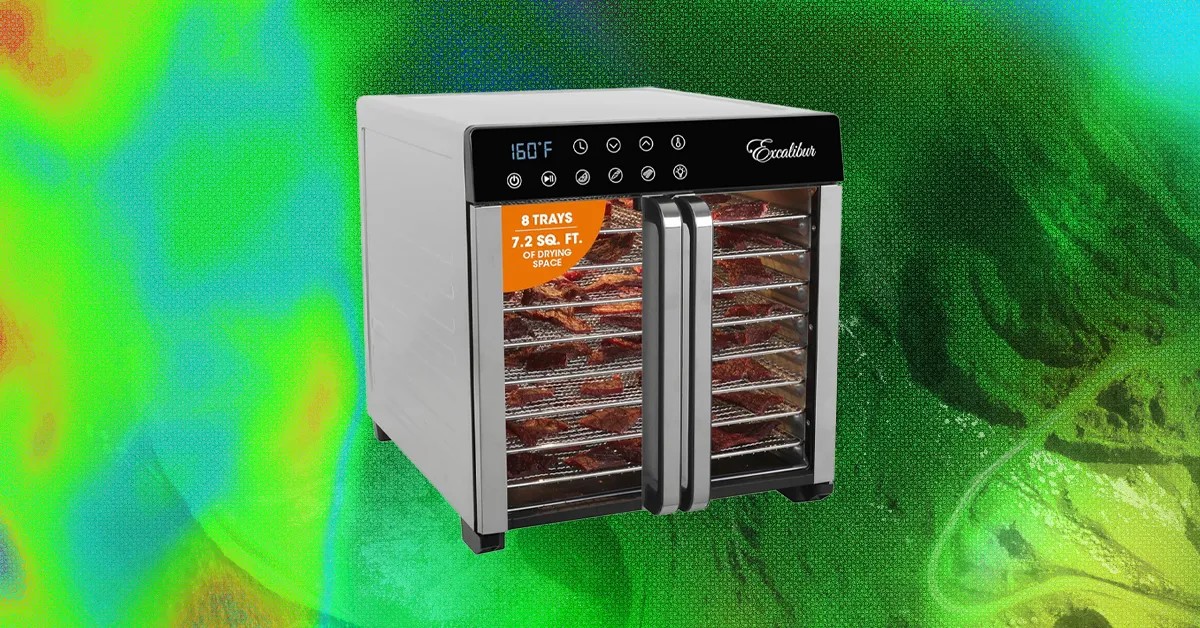
Excalibur built the industry. This is no joke. They make industrial machines that dry food in warehouses. But their consumer models are decent, too. Specifically the DH08SCSS1 Select Digital. It costs $180 (though you can often snag it for $171 on Amazon). It’s got eight trays. 7.2 cubic feet of drying space.
Stainless steel trays. Note: Not dishwasher safe. But they last. It has a digital timer, a little light to check your progress, and mesh sheets for rolling fruit into leather. You press buttons. You wait. It pauses if you need to add more time. There’s a QR code for a digital recipe book, because reading screens is 2026.
I put apples, tomatoes, salmon, and beef in it. Dried in half the time of my old Nesco. Why? The heat distribution is better. And it’s quiet. I timed it at 40 decibiles in my living room. That’s quieter than a conversation. You don’t even notice it’s there. One-year warranty is short, but for the casual user? It’s great.
- Tray space: 1,037 sq in
- Temp range: 85–165°F
- Weight: 16.5 lbs
- Timer: Up to 80 hours
Best Budget: Cosori Pioneer 5-Tray
$50. Can’t argue with the price. Cosori makes good appliances. This one looks retro. Stackable plastic rings. Fan in the base. Lisa tested it and loved the recipes. Dehydrated chili? Yes, you read that right. It worked.
Plastic is BPA-free, but still plastic. The trays don’t fit easily in the dishwasher, despite claiming they’re safe. The cylinder shape is awkward on a counter. You’ll probably stash this in a closet or basement. It’s ugly but effective.
- Trays: 5 x 11” diameter
- Temp range: 95–165°F
- Warranty: 2 years
- Weight: 4.9 lbs
Best for Small Spaces: Elite Gourmet EFD329WD
$46. Compact. Very compact. It nests. Trays stack down to 6 inches. Pulls them up to 10 inches for big batches. Lisa compared the size to a vinyl record. It fits on tiny counters.
No fruit-roll mats included, which is standard for budget picks. It took six hours to dry sweet potato slices at 131°F. Reasonable. If you just need to dry herbs or lemon wheels for cocktails, this is plenty. Don’t expect to cure a deer.
- Diameter: 12.6 inches
- Weight: 5.29 lbs
- Temp range: 95–158°F
- Tray space: 410 sq in
Best for Off-Grid: Dehytray Solar Dehydrator
Solar-powered. Really. The Jua Technology model is outdoors only. 33 inches long. It catches sunlight and turns it into dry food. Great for power outages. Great for homesteaders who hate electric bills.
Lisa dried sweet potatoes in eight hours. But watch out. Insects like sun-warmed meat. Vermin too. Keep it covered or indoors during the night if possible. The warranty is only 90 days. Solar power doesn’t mean infinite reliability.
- Temp: Solar dependent
- Weight: 5 lbs
- Warranty: 90 days
- Tray space: 528 sq in
The Others We Tried
Not every dehydrator shines. Here is why these didn’t make the cut.
Magic Mill Pro ($140): Fast mode is nice. Seven trays. But it takes up too much counter space for what you get.
Nesco Snackmaster Jr ($79): Cute cube. Simple dials. But the capacity is tiny. Less than 4 square feet. Is slicing beef worth the effort for so little space? Maybe not.
Nesco Digital (FD-7SSD, $186): Good machine. Light inside. Seven trays. Just… expensive for what it offers. The Excalibur is better.
Nesco Snackmaster Pro (FD-75A, $80): I used one for ten years. Cracked screens eventually. It was ugly. Hard to store. But cheap trays ($10) made it reliable. If you want utilitarian, this is it.
Breville Smart Oven ($320): It’s an oven first. Air fryer second. Dehydrator third. It dehydrated sweet potatoes in five hours. Good. But you pay for the brand, not the drying power. Buy the Ninja Crispi instead.
How We Tested
We didn’t use charts. We used food.
Apple slices. Citrus rounds. Kale. Beef jerky. Salmon. Sweet potatoes.
We checked evenness. Did the center of the tray dry faster than the edge? Did one batch of apple chips come out crispy while the next was leathery? We measured noise. We cleaned them. We tried to stack them. Real use, not lab specs.
What To Look For
Fan location matters.
Back fan? Air flows horizontally. More even. Expensive units do this.
Bottom fan? Air pushes up. Cheaper. Trays might need rotation if food sticks.
Shape matters for storage. Round tubes roll away. They don’t tuck into corners. Sliding racks fit better.
Steel vs Plastic.
Steel doesn’t crack. Plastic does. If you plan to keep this for five years, get steel trays.
Capacity is key.
Herbs? Small unit fine.
Garden tomatoes? Hunter jerky? Big unit needed.
Dehydrator vs Freeze Dryer
They are not the same thing.
Dehydrators use heat (95–165°F). Water evaporates.
Freeze dryers freeze food below 0°F. Ice sublimes via vacuum.
Freeze-dried food stays crunchy for 25 years. Dehydrated food gets chewy. Lasts up to a year. And guess what? Freeze dryers cost thousands. Dehydrators cost $50–$200. The choice is obvious for most kitchens.
Storage Rules
Texture degrades.
I kept apple chips in a ziplock bag. They got soft in two days. Disappointing.
Vacuum seal.
Always. Once cool. Seal it tight. Use an oxygen absorber if you want longevity.
I have a FoodSaver from 2009. It still works. That is good enough for me. Home-dried food won’t match commercial crispiness, but stored right, it lasts four months to a year. Check for mold. Throw away anything suspicious. Don’t risk food poisoning over savings.
What Not to Dry
Fat stays fat.
Water evaporates. Lipid doesn’t. High-fat meats, oily fish—they go rancid. They smell. Bad idea.
Dairy.
Needs cold. Don’t dehydrate cheese unless you know chemistry.
Very watery items.
Watermelon? Cucumber? They collapse. Structure fails. Freeze-dry them instead. Dehydration shrinks them into nothingness.
So you buy one. You dry some carrots. Maybe some beef.
The counter looks weird now.
You wonder if the next batch will stick to the tray. It might.