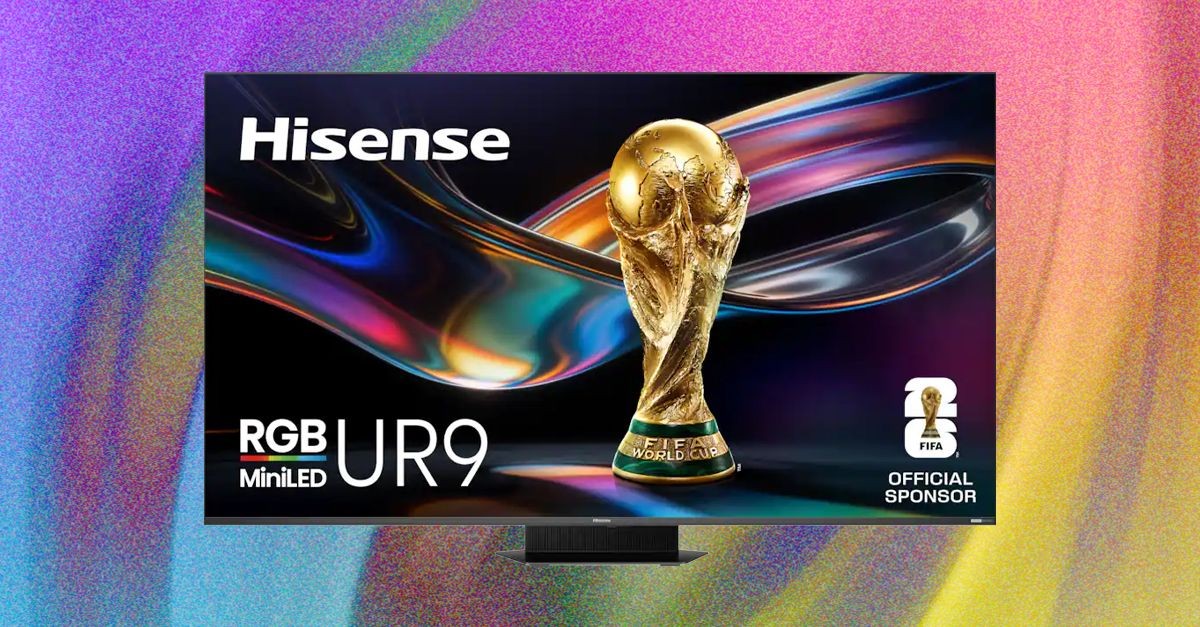
RGB MiniLED TVs are finally here.
Hisense launched the UR9 first, then Sony and TCL jumped in with the Bravia 7 MarkII and RM9L. Honestly? The specs can wait. The terms—OLED, QLED, Art TV—can feel like marketing noise. What matters is how it looks. The UR9 proves that RGB MiniLED is better without needing an engineering degree to explain why.
So here is the quick version: Old TVs shine white light through LCD panels. Boring. The new MiniRGB shoots red, green, and blue light directly at the screen. The result? Sharper colors, deeper contrast, better control. LG and Samsung are pushing “MicroRGB,” which just means smaller LEDs. Same end goal.
The UR9 is Hisense’s flagship. But the price is weird for that status. You can get a 65-inch for $2,000. That is cheap compared to what you pay for a Samsung or LG. I have reviewed too many entry-level Hisense sets in the past, the kind that struggle with basic brightness, sitting next to bargain bin models from Amazon and Roku for $800. This is not one of those.
It is a gaming beast. It hits an unusual 180Hz refresh rate (up to 330Hz VRR) when you plug a PC into the DisplayPort. The image quality shocked me, even if it can quite catch the expensive LG micro-LED sets yet.
Out of the Box
The TV is all black. It is thin, only 1.8 inches deep. The stand assembly was simpler than the Sony equivalent. Once it was standing there, I ran into Google TV. Setup was easy until the QR code for the Google Home app failed. Had to type in my Gmail password manually. Typical tech hurdle. The UR9 does use Wi-Fi 6E. It’s fast.
The remote? Too many buttons.
Why are they like this? I hate complexity. The mute button lives on the bottom right corner. Volume is miles away. There is a dedicated Kids button. There is a customizable button, which I gave to YouTube TV. There is even a button to switch user profiles on Google TV. Nobody switches profiles there. You switch them inside the Netflix or HBO apps. It’s a lot.
I did like the backlighting on the remote. It adjusts to your room lights. The colorful icons for Prime Video and Netflix are easy to find. That counts for something.
Behind the screen, things get more serious. Three HDMI 2.1 ports. That beats most TVs that only offer two. Add the DisplayPort on the side for PCs, plus an Ethernet port, optical out, coax, and two USB slots. You can charge an antenna or plug in a drive. There is no headphone jack, though. 3.5mm? Gone. Who knew?
The TV hits 100% of the BT.20220 color standard. Some settings worked great. Motion Clearness helped me track a soccer ball during a World Cup match without it looking like a soap opera. The Dynamic Color Enhancer let me tweak sliders to make shows pop.
Other features felt like placebo medicine. The Blue Light filter did nothing noticeable for my eyes. Smoothing gradients and contrast adjustments were marginal at best.
Picture Test
Before we dive into the MiniLED results, remember this: OLEDs win on blacks. They are infinitely black. MiniRGB wins on brightness. We are talking 5,000nits of potential brightness here compared to ~1,000 for most OLEDs. Colors should be more vivid too. OLEDs are dropping in price. You can buy a 65-inch now for $2,700. The UR9 sits at a reasonable middle ground for the new tech.
I started with The Last Duel.
The MiniRGB tech delivered exceptional color and contrast. Blacks looked deep enough to rival OLED. Then I ran the Spears & Munsil tests. On the Bravia 7, skin tones were okay. On the UR9 they were better. The mist over the snowy mountains in the demo reel was distinct. You could see every wisp of vapor. Green grass behind a fence looked mostly accurate, though slightly brown. My Leica projector showed greener grass. Nighttime scenes had amazing depth. A red cactus looked… fine. Not as red as I hoped. The yellow flower next to it, though? Blazingly vivid.
Older movies that usually look washed out on cheap screens came alive. Awake. Tron: Ares. The Creator. Vivid and clear. I could use Theater Night or Day modes to boost contrast, but I preferred Filmmaker Mode for accuracy.
Don’t get it twisted. OLED still has better blacks. A projector still wins on sheer color brilliance. But MiniRGB makes reds scream. I watched Project Hail Mary on Fandango At Home. The rings around the planet were stunning. The expensive LG Micro RGB looked about the same. The cheap TV won this round.
Sports look incredible. Jerseys popped. The grass was green but natural. News on CBS didn’t look oversaturated like it did on the Bravia 7. The colors were flat on the Sony.
Art mode is just a screensaver, technically. No matte finish or wood bezels to pretend this is a canvas. Still, a ship sailing on blue ocean water looked terrifyingly real.
Gaming Setup
If you game on PC, this TV is king among MiniLEDs.
You connect via the DisplayPort. It needs a USB-C cable that handles 40 Gbps. It is finicky, but it works.
I tested with an Alienware laptop running an Nvidia RTX card. At 330Hz variable refresh rate, Crimson Desert felt alive. Every frame landed perfectly. Controls were immediate. Forza Horizon 6 and 007 First Light ran smooth. Input lag felt non-existent.
But not everyone owns a gaming PC. So I tested Xbox Series X.
I played Hellblade II. Most budget TVs make ocean scenes look grey and flat. Not here. The grays were inky rich. Underwater sections in Subnautica 2 were compelling.
The UR9 stands out. It is not the most customizable TV out there—the LG lets you tweak more picture settings—but it is the better gamer’s TV. The dedicated port matters. The speed matters.
In a market filled with expensive, complex sets, this one keeps it simple. It delivers the goods where they count.
The future of brightness is here, and it does not require breaking the bank. Yet.