Nike isn’t just a shoe company. It’s a cultural engine that has spent decades mastering the art of selling identity, not just rubber and leather. Today, it’s one of the most recognized brands on the planet, with a catalog that stretches from the historic Air Jordan and Air Force 1 lines to the Converse label it acquired in 2003. But that dominance wasn’t handed down. It was built on a mix of aggressive marketing, product innovation, and a few high-stakes gambles that nearly bankrupted the company.
The story starts long before the swoosh became ubiquitous. It begins in 1962, when Phil Knight, a former University of Oregon track star, visited a factory in Japan. He was impressed by Onitsuka (now Asics) and their speedy production. He struck a deal to distribute their shoes in the US. By 1964, Knight and his former coach, Bill Bowerman, had formed Blue Ribbon Sports. They weren’t just distributing anymore; they were designing. In 1967, they released the Tiger Cortez, a modified version of the Onitsuka Tiger.
Then came the split. In 1971, Blue Ribbon Sports broke ties with Onitsuka. They needed a new name. They chose Nike, after the Greek goddess of victory. They also needed a new logo. Carolyn David, a design student at Portland State University, created the iconic swoosh for $35. Knight eventually paid her back with 500 shares of stock in 1983—a decision that turned a small fee into a fortune, but initially, the brand had nothing to show for its new identity except a name and a check mark.
The $2.5 Million Gamble That Saved Nike
Public markets weren’t kind to Nike right after it went public in 1980. The company struggled. It needed a win. It needed a star.
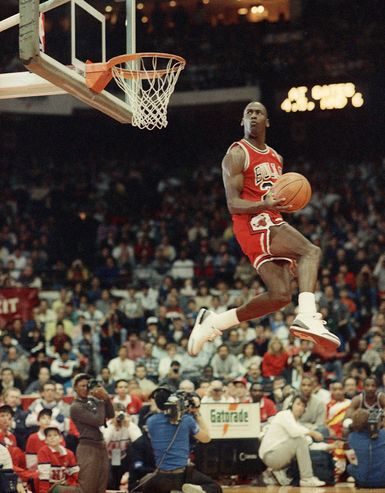
In 1984, Nike did something unheard of in the sports marketing world. It spent its entire marketing budget to sign Michael Jordan. It was a rookie. A second-round pick. No one knew who he was. But Nike saw potential. The deal was for five years and $2.5 million. That was an insane amount of money for an unknown athlete at the time.
Jordan wore the Air Jordan, a black-and-red basketball shoe that cost $65. Adjusted for inflation, that’s about $192 today. The shoes sold out instantly. The controversy around the NBA initially banning them actually helped sales. Nike paid the fines. The narrative was set. Nike was no longer just a sports brand; it was a lifestyle brand. It was cool. It was dangerous.
This move shifted the center of gravity for the entire industry. Other brands followed suit, realizing that celebrity endorsements were the fastest way to build loyalty. Nike has since signed everyone from Tiger Woods to LeBron James and Serena Williams. They don’t just pay athletes to wear shoes. They pay them to embody a philosophy.
Marketing That Hits Different
Nike’s marketing is different because it doesn’t focus on the trophy. It focuses on the work. The “Just Do It” slogan, launched in 1988, wasn’t about glory. It was about the grind. The daily struggle. The early mornings. The pain. That message resonates because it’s universal. You don’t have to be an Olympic athlete to relate to the effort required to achieve a goal.
The imagery supports this. Nike shows everyday people overcoming obstacles. They show women facing systemic issues in sports. They show marginalized communities finding strength through movement. This isn’t just PR. It’s strategic. By aligning with social issues, Nike builds deep emotional ties with its customers. People buy from brands that share their values. Nike makes sure its values are visible.
This approach extends to product design. Nike doesn’t make one shoe for everyone. It segments its market. It creates specific lines for runners, basketball players, and women. Each division has its own identity. This focus on style and quality ensures that the marketing claims hold up. The product backs the promise.
Digital and Data-Driven Expansion
Nike was early to embrace online sales. It didn’t wait for e-commerce to become the norm. It invested in digital technology to understand its customers better. This data-driven approach allows for personalization. Nike knows what you buy, how often you buy, and what you ignore. It uses that information to tailor its marketing and product offerings.
The company has also expanded beyond footwear. Through acquisitions and internal development, Nike now offers apparel, fitness apps, and equipment. It’s not just about running a marathon anymore. It’s about leading a healthier lifestyle. This expansion has allowed Nike to reach consumers who may never step foot in a stadium but still want to feel like athletes.
Leadership and Legacy
John Donahoe became CEO in 2020, taking the helm from Mark Parker. Donahoe brought a digital-first mindset to the company, pushing for direct-to-consumer sales and data integration. But Phil Knight, the cofounder, remains involved. He serves as chair emeritus. His influence is still felt in the company’s culture and strategic direction.
Nike’s success is tied to its ability to blend innovation with marketing. It’s not enough to make a great shoe. You have to make people care about the shoe. Nike has mastered that. It has built a brand that transcends sports. It’s a symbol of aspiration. Of effort. Of victory.
But the market is changing. Consumer preferences are shifting. Sustainability is becoming a major concern. Competitors like Adidas and Under Armour are gaining ground. Nike’s next challenge will be maintaining its relevance in a world that is increasingly digital and conscious. The swoosh may be iconic, but icons can fade if they don’t evolve.
For now, Nike remains the gold standard. It’s a company that understands the power of story. It knows that people don’t just buy products. They buy into narratives. And Nike has written some of the most compelling stories in modern business history.
How the Jordan Deal Rewired Sneaker Marketing
The 1985 contract between Michael Jordan and Nike didn’t just sell shoes. It invented the modern athlete endorsement model. Before that deal, brands paid athletes to appear in commercials. Nike paid Jordan to become the brand.
When the NBA banned the original Air Jordans for violating uniform color codes, they fined Jordan $5,000 each time he stepped on the court in the black-and-red kicks. Nike didn’t pull the plug. They paid the fines. They ran ads that said the league couldn’t stop you from wearing them.
The strategy worked. Sales hit $70 million in the first two months. By the end of 1985, the Jordan line generated over $100 million in revenue for Nike. It proved that controversy, when managed correctly, is a marketing asset, not a liability.
In 1997, Nike formalized this success by spinning the Jordan brand into its own division. The swoosh disappeared. The “Jumpman” logo took its place. A silhouette of Jordan mid-air, ball in hand. It became a standalone empire.
The Economics of Sneaker Culture
The Air Jordan launched what we now call sneaker culture. It wasn’t just footwear. It was a symbol of style, community, and history. Hip-hop artists in the 1980s wore them. That cultural visibility made the shoes desirable beyond the basketball court.
Competitors noticed. By the mid-2000s, brands like Adidas, Puma, and Reebok started signing rappers and influencers. Kanye West. Big Sean. Cardi B. They created a new subculture where streetwear and athletic gear merged.
The value proposition shifted from utility to collectibility. Rare pairs now command astronomical prices at auction. An original pair of Air Jordans sold for $1.8 million in 2023. Eight pairs of Virgil Abloh’s 2020 Nike Dunk Lows fetched more than $565,000 that same year.
This isn’t just nostalgia. It’s a high-stakes secondary market where scarcity drives price. Nike understands that keeping some shoes off the shelves creates demand for others.
Diversification Beyond the Swoosh
Nike didn’t stop at shoes. The success of the Jordan deal gave the company the capital and confidence to expand.
- 1988: Acquired Cole Haan. Sold in 2012.
- 1990: Opened NikeTown. A retail experience designed to showcase the full brand ecosystem, from Mia Hamm to Tiger Woods.
- 1994: Bought Canstar Sports, parent company of Bauer. Sold in 2008.
- 1996: Launched Nike ACG for extreme sports.
- Early 2000s: Entered sports tech. Heart rate monitors. Wrist compasses. Fitness apps.
- 2003: Acquired Converse.
- 2008: Bought Umbro. Sold in 2012.
- 2014: Launched NikeLab. A flagships for innovation at the intersection of sport and fashion.
Each move was calculated. Nike wasn’t just selling gear. It was building an ecosystem.
Navigating Controversy and Labor
Growth brings scrutiny. In the 1990s, Nike faced intense criticism over labor conditions in Indonesian factories. Low wages. Poor safety. The backlash was severe.
Nike responded by creating a code of conduct. It raised minimum worker ages. It adopted U.S. clean-air standards in overseas plants. It spent the 2000s addressing these concerns. The issues didn’t disappear entirely. In the 2020s, the company faced a gender pay discrimination lawsuit.
Nike also knows how to pick its battles. In 2018, the brand launched a campaign honoring the 30th anniversary of “Just Do It.” It featured Colin Kaepernick. The ad read: “Believe in something. Even if it means sacrificing everything.”
The campaign sparked outrage among older demographics. It resonated deeply with consumers aged 18 to 34. Sales increased. The risk paid off.
This approach reveals a pattern. Nike supports its endorsers when it aligns with its brand identity. They stood by Tiger Woods and Kobe Bryant during scandals. They dropped Maria Sharapova, Lance Armstrong, and Ray Rice. The decision isn’t always consistent. It’s strategic.
Maintaining Relevance
Nike’s longevity comes from positioning itself as a bridge. Between elite athletes and everyday consumers. Between performance and style.
The brand started as a track shoe. It evolved into a cultural emblem. It stays relevant by acting as a conduit for competitive spirit. Whether you’re a professional or an amateur, Nike positions its products as tools for that spirit.
The Jordan deal changed how brands think about celebrities. It’s no longer about appearance. It’s about identity. And for Nike, that identity is still moving forward.