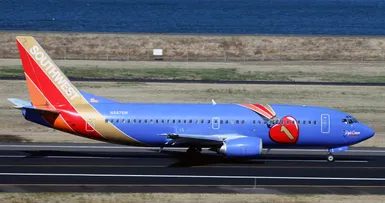
Southwest Airlines didn’t start as a global giant. It began as a commuter shuttle between Dallas, Houston, and San Antonio. Founded by Herbert Kelleher and Rollin King in 1966, the company incorporated in 1967 as Air Southwest Company. They adopted the current name in 1971. The goal was simple. Cheap fares. No-frills service. Frequent flights on short routes.
The business model relied on one critical decision: Southwest Airlines Boeing 737 exclusivity. By using only one type of aircraft, the airline slashed maintenance costs. It also sped up turnaround times between flights. Employees didn’t need retraining for different planes. Mechanics didn’t need to stock parts for various models. Ticketless travel further reduced overhead. Headquarters settled in Dallas, Texas.
The Love Field Era and Casual Culture
Legal battles delayed commercial operations until 1971. When Southwest finally took off, it used Love Field near downtown Dallas. The theme became “love.” Promotions leaned into it. Flight attendants wore hot pants and go-go boots. They called drinks “love potions.”
It was fun. It was unconventional. It worked.
Hot pants vanished in 1981. But the casual uniform style stayed. The fun didn’t end there. When cigarettes were banned on flights, Southwest handed out lollipops. Around Christmas, flight attendants sang carols. The airline wasn’t just moving people. It was selling a vibe.
Expansion started in 1975. New routes spread across Texas. Federal deregulation in 1978 allowed the airline to stretch beyond state lines. Growth was conservative. Southwest moved into neighboring southwestern states first. By the 1990s, service reached California, the Midwest, and the East and Southeast.
Restructuring for Survival
The early 21st century brought financial strain. The airline industry struggled. Southwest had to restructure. Colleen Barrett became president in 2001. She was the first female to lead a major U.S. airline.
Barrett pushed for efficiency. Self-service check-in kiosks arrived in 2002. Online boarding passes followed in 2004. Cost-saving measures included flight cuts and employee buyouts.
The company also stepped into the spotlight with the reality TV show Airline. It aired on the A&E Network from 2004 to 2005. It gave viewers a look behind the curtain.
In 2008, Gary Kelly replaced Barrett as president. The leadership changed. The strategy remained focused. Keep costs down. Keep fares low. Stick to the 737.
Why the Single-Fleet Model Matters
Most legacy carriers operate a mix of aircraft. Airbus. Boeing. Regional jets. Wide-body planes. Each requires different training. Different maintenance schedules. Different ground equipment.
Southwest avoided this complexity. A single fleet means predictable expenses. It simplifies scheduling. It reduces downtime. This isn’t just a cost advantage. It’s a structural one. When fuel prices spike or demand drops, a simplified operation can adapt faster.
The trade-off is rigidity. Southwest can’t easily switch to smaller planes for low-demand routes or larger ones for peak times. But for a short-haul, point-to-point network, the 737 fits.
The Legacy of Low-Cost Innovation
Southwest’s history shows that simplicity scales. The early legal delays forced a focus on efficiency before expansion. The “love” culture built brand loyalty without expensive advertising. The single-engine strategy kept margins healthy during