


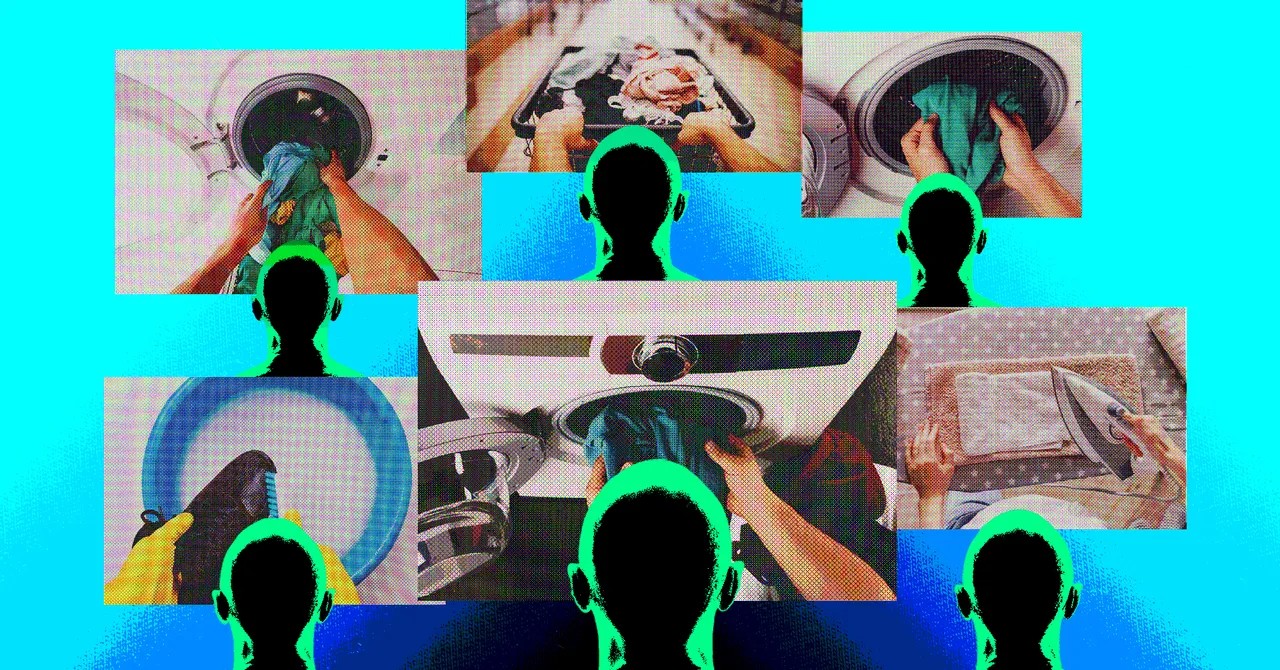
I’m no longer human. Well, not just a human. I am a vessel for data. A medium. I held a knife to a cucumber, hunched over like a goblin so the phone strapped to my forehead wouldn’t miss a finger, and sliced. Chop chop. The slices landed in the bowl. Recording ends. Somewhere, in a server farm, a robot gets slightly dumber. Or maybe smarter. It doesn’t feel like it matters.
For a week last month, my existence was reduced to teaching humanoid bots how to scrub dishes, pour drinks, and fold my jockstraps. If we ever want machines to live with us, they need fine motor skills. Fine motor skills they apparently lack. I did the work with pride. Mostly because I wasn’t used to selling my laundry folding. And the money helped. Slightly.
Egocentric video—shots taken from the wearer’s head or chest—is the new oil. The internet is flooded with video, sure, but you can’t scrape “how to pour water without spilling” from TikTok effectively. Labs need hyper-specific clips. Thousands of close-ups on hands gripping a glass. The industry estimates top players will buy hundreds of millions of hours of this stuff. Just to get a robot to tie a shoelace? Probably.
“I want every person on the planet to record themselves doing dishes. Then you never have to.”
— Avi Patel, Founder of Kled
Patel is twenty-two. He thinks your drudgery is his gold mine. This model already works in India, where self-employed workers might earn $125 a month. Here in the States, companies like DoorDash are testing a ‘Tasks’ app for it. Soon, you won’t just deliver Thai food. You’ll deliver the visual memory of picking it up.
I already had a head mount. I’d tested DoorDash’s app, found it dystopian, but needed to see what was next. California bans Tasks, so I tried three others: Kled, Luel, and Waffle Video.
The pay was garbage. I basically trained robots for free while trying to offset $2,500 San Francisco rent. But there was a perk. My apartment hasn’t been this clean since college.
Kled: The Trap
Kled blew up after Patel posted a clip on X showing their video archive. 4 million views. Labs emailed him begging for data.
But the money? Non-existent, initially. Kled has 300,00+ users, mostly uploading their camera rolls for pennies. There’s a “special tasks” section where you pick chores. No hourly rate. Just “Low,” “Medium,” or “High” tags. Vague. Deceptive.
I chose “Take out trash.” Medium pay.
The app told me what to do. Tie the bag. Walk it out. Steady the camera. No faces.
I strapped the phone to my brow. Walked to the alley. Felt stupid. Tried not to bump into neighbors. I got anxious. Did I explain the headset? No. The recording cut off at two minutes. The limit.
Patel admits the big headache is fraud. People upload internet clips or black screens. In Nigeria, 95% of uploads were junk. Kled pulled out.
I did nine chores for Kled on my weekend. Then I noticed the fine print.
Upload 100 media files before they pay you.
Rip-off. So I uploaded 90 vacation photos. Just to hit the threshold. They took days to process. I moved on.
Luel: Rejection City
Luel is similar. Founded by William Namgyal, who was 18 when they joined Y Combinar. He talks about language preservation and screen recordings. Sounds noble. Feels clunky.
The only job listing: Record any hands-on activity from a first-person perspective.
Pay: $6.60 per hour.
US federal minimum wage is $7.25. Do the math.
Requirements: Head mount only. Horizontal. 1080p minimum. Hands visible 95% of the time.
I scrubbed dishes. Loaded the dishwasher. Recorded five minutes. Submitted.
Rejected. Next day: “Hands not visible in enough frames.”
Zero dollars earned.
A few days later, Luel emailed back. Reversing the decision.
“Your hand visibility was 83%, but we’ll pay.”
I earned $0.55.
Fifty-five cents for five minutes of my life and dignity.
Waffle: The Winner
Waffle Video was better. Focused only on video data. Paid $25/hour for “missions” like pouring water or tying shoes.
Actually respectable.
Co-founder Joshua Mesnik calls it a “symbiotic relationship.” You give them your life/perspective; they give you cash. He’s 34. Optimistic.
They have a strict pipeline called MAPLE. Every video gets labeled, checked for copyright, structured. Labs don’t want raw video. They want metadata-ready packages.
I got into the groove.
Tying shoes? Done.
Scrubbing dishes? Done.
Pouring Diet Coke between glasses until it went flat? Absolutely.
I glued that phone to my face. Blazed through 125 uploads.
Earned $20.
Finally. Progress.
The Reality of AI Gigs
Namgyal fears unemployment will spike. Robots replace jobs, sure, but who trains the robots? You do. It’s a temporary stopgap, he says. A way to make quick cash, not a solution for the labor crisis.
Patel points out one guy on Kled making $8,000/month driving a truck, filming potholes with his dashcam. An outlier. The rest? Most earn scraps. It’s still gig work. No benefits. No stability. Just hope.
Maybe specialization helps. Anyone can chop a cucumber. But only a pro sushi chef can show how to slice salmon for an AI chef robot.
“Chefs won’t be replaced,” Patel argues. “They’ll just be filming at home.”
Chilling. Or convenient? Depends who you ask.
The Payout
Kled finally paid out.
I sent 9 videos and 97 photos.
My total: $1.
One dollar.
For a week.
Total earnings across all three apps? $21.55.
Not bad for buying some extra Coke. Bad if that’s your income.
I felt a flicker of pride. I helped build the future. Maybe my grandkids won’t know how to fold towels because the bot will.
Then I stopped.
I’m training the things that will take more jobs. Not just chores. Real jobs.
Teach the bot to cook tonight, so you can afford groceries tomorrow.
Irony tastes like Diet Coke.
Sour.


