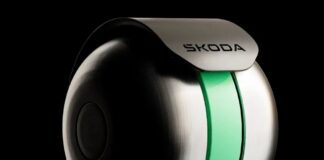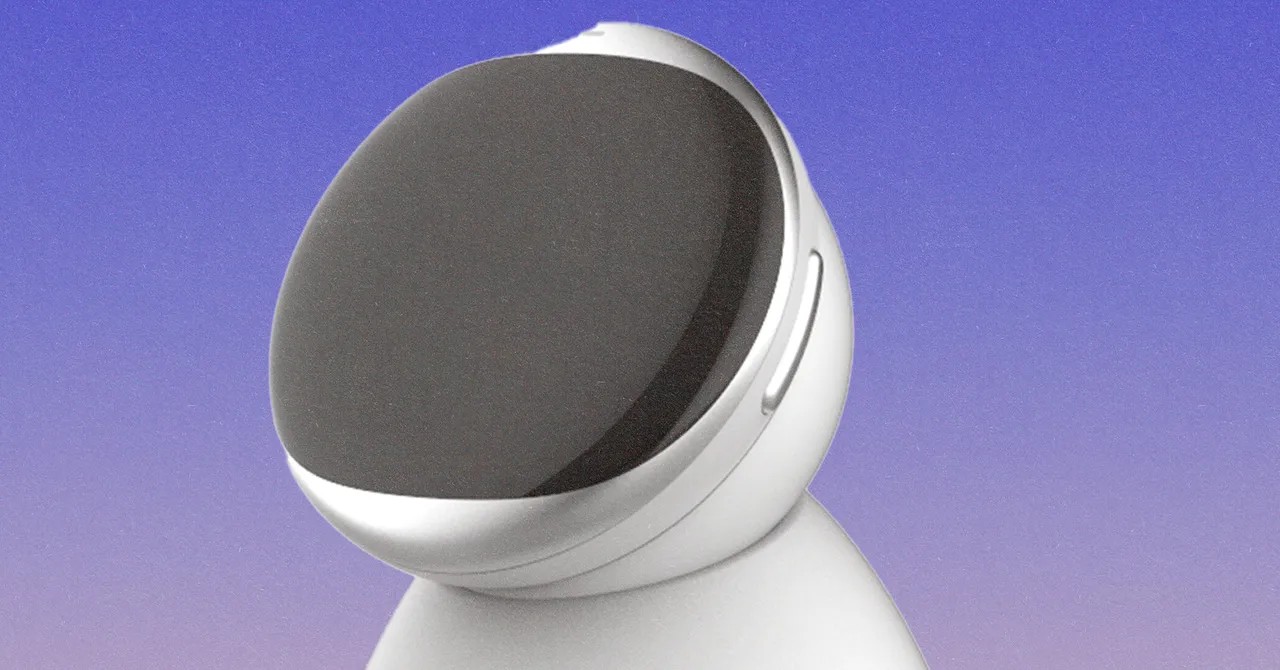
Jibo is dead.
Long live Jibo. Sort of.
Jibo was the cute, social robot that sat motionless in your living room. It launched in 2014. Back then, the smart-home industry hadn’t even really started. Amazon’s Echo speakers were just a gleam in Jeff Bezos’s eye. Jibo couldn’t move. It couldn’t touch anything. But it could wiggle. It could talk. It felt endearing. It was adorable. It was also not competent enough to survive. It died too soon because people wanted utility, not charm.
Now, that dream is back. In a different, slightly more sinister form.
A company called Lingverse is rebirth-ing this concept. They are not building a robot. They are building a camera. Or a wearable. Or a paperweight with a lens. It is called the iKairos. Lingverse recently closed a $29 million funding round for this device. You can wear it as a pendant. You can clip it to your shirt. Or you can bolt it to a table. Like Jibo. Watching.
The details are sparse. That is a feature, not a bug, in startup land.
What exactly is the iKairos?
Lingverse claims you can ask the iKairos questions. You can offload tasks. You can do whatever modern voice assistants do, which is nothing groundbreaking. The device will likely cost between $19 and $29. That is a steep typo in my brain—$199 to $249. With a subscription. Because nothing says “personal assistant” like a monthly fee for basic curiosity.
The name comes from Kairos. Greek for “the right moment.” It sounds like Icarus. The guy who flew too close to the sun and fell out of the sky. The company insists that coincidence is accidental. They chose the name because the generative AI boom makes this time perfect for an artificial personal assistant.
“It’s the right time to combine all the things,” Jiawei Gu, CEO, told WIRED. He claims iKairos carries forward Jibo’s original dream.
Does it?
Gu was on Jibo’s board before the company collapsed. He is not a founder. Lingverse claims it has the “blessing” of Jibo’s founders. It does not own the intellectual property. Yet the website lists Jibo as a product. Lingverse holds several core patents but won’t say which ones. Ambiguity is the currency here.
A Guardian or a Voyeur?
The press release is full of buzzwords.
The iKairos will “continuously observe both you and your surroundings.” It will “begin to act as a personal AI guardian.” No details on how. No specifics on what that means.
It is a dual-purpose device. Wearable. Stationary.
When it is stationary, it watches you. It gathers data on how you interact with the world. When it is wearable, it sees through your eyes. Two viewpoints. A holistic sense. That data is then transformed. Into what?
AI-generated images.
The website now calls it an “AI journal.” The slogan: “Every starred moment becomes a capsule.” It watches for what matters. Then it seals it.
Look at the sample images. They look uncanny. Very much like AI slop. Plastic skin. Melting backgrounds. Dreams that have no logic.
“It captures your day effortlessly,” a representative said. “At the end of each day, it generates reflection.” Living with it helps you understand yourself. Easy nostalgia.
Is that helpful? Or is it just another filter?
Lingverse knows AI content. They make the Luka AI Reading bot for kids. At CES 2026 they showed the Luka AI Cube. It has a camera. It answers questions. It turns artwork into unsettling, talking AI videos. The tech is there. The quality? Questionable.
When asked if the images would devolve into low-quality AI garbage, the company pushed back. They claim a “quality gate.” The images get checked. Visual scene cross-referenced with audio context. Where you were. Who was there. What was said. You can choose which images to keep.
So the AI makes the draft. You edit the final copy.
Privacy Paradox
Lingverse is careful about privacy.
No video recording. The camera takes snapshots. They are deleted later. Audio is only recorded when a human voice is detected. Physical shutter. Data processed on device or encrypted. No training the models.
Sounds clean. Until you realize the device is constantly looking for “moments.” It is constantly deciding what is “starred.” What is “worth capturing.”
The algorithm is the judge.
Presales start later this year.
Is anyone actually going to buy this?
The market is crowded.
Apple. Amazon. Google. They are betting big on smart speakers. Google released new AI speakers last month. OpenAI is partnering with Jony Ive. Rumors say a home assistant with an iPad screen is coming. Apple is working on a hub.
And the journals? Look at Bee AI. Look at Looki L1. Google Photos already lets you AI-ify family photos.
Why would you pay $249 plus a subscription for a device that does what your phone already does? Worse, probably. The images are described as “uncanny.” The privacy claims rely on faith in the encryption.
Jibo failed because it was a robot that couldn’t do anything useful. It was a decoration.
The iKairos might fail for the same reason. It is a decoration that watches you. It generates “slop” to remind you who you are. It is a mirror made of pixels and promises.
Lingverse is leveraging Jibo’s legacy. The robot was loved for its presence, not its presence of mind. The iKairos has plenty of presence. Does it have enough mind?
We will have to wait. And watch. And wonder if we really want our memories to be interpreted by an algorithm that doesn’t understand the sun.