Air France isn’t just an airline. It’s a historic entity shaped by mergers, government mandates, and the brutal economics of aviation. Founded in 1933, it grew into a global powerhouse. Today, it flies everywhere. But its journey wasn’t linear.
The story starts with consolidation. Four smaller carriers merged that year: Société Centrale pour l’Exploitation de Lignes Aériennes, Compagnie Internationale de Navigation, Air Union, and Air Orient. They needed scale. The French government backed the move. Months later, Air Union absorbed Compagnie Générale Aéropostale. The result was Air France. Before World War II, it built a massive European network. The war devastated operations. Service didn’t resume fully until October 1945. The Paris-to-London route restarted then.
By June 1946, the airline crossed the Atlantic. The first flight landed in New York City. Decades of expansion followed. By the early 2000s, Air France served over 200 cities across 80 countries. The hub shifted to Roissy–Charles de Gaulle in 1974.
The Supersonic Gamble
Innovation defined this era. On January 21, 1976, Air France launched Concorde flights. The target was Rio de Janeiro. It was fast. It was iconic. It was also expensive to run.
The economics didn’t work. Unprofitability forced route cuts by 1982. Only the Paris–New York route survived. The financial losses mounted. Concorde operations ceased in 2003. The company couldn’t sustain the high costs.
Consolidation and Privatization
The 1990s brought structural changes. In 1992, Air France merged with Union des Transports Aériens (UTA). This created the Air France Group. It became one of the world’s largest air transport groups. The completion came in 1997 with the acquisition of Air Inter (now Air France Europe).
Two years later, the airline went public. It listed on the Paris Stock Exchange’s primary market. This marked a shift toward privatization. The French government agreed to relinquish majority ownership. A privatization program launched in 2002.
Global strategy followed. In 2000, Air France joined Delta Air Lines, Korean Air, and Aeroméxico to form SkyTeam. The alliance allowed shared facilities and services. It was a move to compete with other global carriers.
The KLM Deal
The biggest move came in 2004. Air France acquired the Dutch airline KLM. This created the Air France–KLM Group. It became one of the largest air carriers globally.
The deal had a specific structure. It allowed both airlines to operate separately. They kept their own hubs. They maintained their flights. The logos stayed distinct.
This structure is still in place. The merger combined scale without forcing immediate integration. The French government reduced its stake. The market took over.
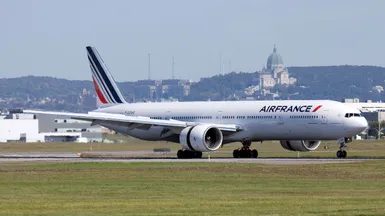
Air France remains a major player. It flies Boeing 777-300ERs. It serves the globe. Its history shows how government support, mergers, and market forces interact. The Concorde era ended. The KLM partnership continues. The airline adapts.
The financial details matter. Ownership percentages shifted. Routes were cut when they didn’t pay. Alliances were formed for efficiency. These aren’t abstract concepts. They are real decisions. They determine where you can fly and how much it costs.
Air France survived wars. It survived the end of supersonic travel. It survived privatization. The next challenge will come from market shifts. The company will have to adapt again. The question isn’t if it will change. It’s how.