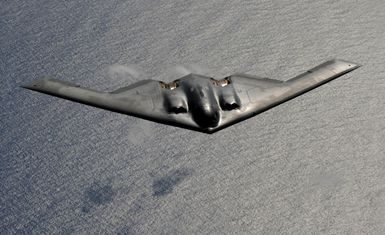
Northrop Grumman built the B-2 Spirit. The four-engine, subsonic flying-wing aircraft entered U.S. Air Force operational service in 1993. Northrop Grumman served as the prime contractor then and maintains the fleet today. That single contract defines much of what the company is known for now.
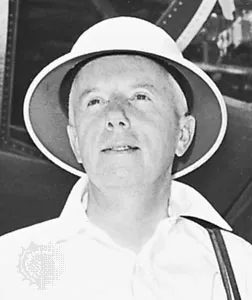
But the company didn’t start with stealth bombers. It started with a man named John Knudsen Northrop. In 1928, he founded Avion Corporation. Capital ran out fast. By 1929, he merged Avion with United Aircraft and Transport Corporation, operating as a division called Northrop Aircraft Corporation. Then came 1932. Bad business conditions forced a split. John Northrop broke with United Aircraft and Transport to form Northrop Corporation. Douglas Aircraft Company held 51 percent of the stock. During that period, the team built the Gamma and Delta series of single-engine, all-metal aircraft.
The corporate identity shifted again later. The entity formed in 1939 as Northrop Aircraft, Inc. became Northrop Corporation in 1958. The current name, Northrop Grumman, appeared in 1994 after the acquisition of Grumman Corporation. Headquarters sit in Los Angeles. By 2001, the company employed roughly 80,000 people, most of them in the United States.
Beyond the stealth bomber: What else does Northrop Grumman make?
The B-2 gets the headlines. But the revenue streams run deeper. Northrop Grumman is the prime contractor for the Joint Surveillance Target Attack Radar System (Joint STARS). This advanced airborne surveillance system serves both the U.S. Air Force and the U.S. Army.
The company manufactures military radar systems. That includes airborne fire-control radars and early-warning radars. Electronic countermeasures systems fall under the same umbrella. They also produce the E-2C Hawkeye early-warning aircraft. Unmanned drone and decoy aircraft are part of the lineup too.
Boeing relies on Northrop Grumman as a key supplier for its military aircraft programs. On the civilian side, Northrop Grumman has produced air traffic control systems for airports around the world. This makes it a leading provider of airspace management systems.
How did subsidiary acquisitions shape the company’s reach?
Two major subsidiaries expanded the company’s footprint significantly. Logicon, Inc., stands as a wholly owned subsidiary. It provides information-technology services to U.S. government agencies and commercial customers. It also offers management support for U.S. military weapons systems.
The Litton Sector, formerly Litton Industries, took a different path. It became the largest maker of nonnuclear ships for the U.S. Navy. The division designs, builds, and overhauls surface ships for government and commercial customers worldwide. It is also a major provider of defense and commercial electronics technology, components, and materials.
Why does this matter to a financial reader? Because the company isn’t just an aircraft builder. It is a diversified defense and aerospace conglomerate. Its revenue depends on long-term government contracts, complex supply chain roles, and global infrastructure needs. The B-2 is a flagship product, but the radar systems, shipbuilding, and IT services provide the steady cash flow that funds the next generation of defense technology.
The current company was formed in 1939 as Northrop Aircraft, Inc., and was renamed Northrop Corporation in 1958. Its present name was adopted in 1994 following the acquisition of Grumman Corporation.
That timeline tells you how volatile the defense industry can be. Mergers, splits, and name changes aren’t just administrative. They signal shifts in strategy, capital structure, and market focus. For investors or analysts, understanding these structural moves is just as important as tracking the latest jet contracts. The company’s ability to pivot from shipbuilding to stealth bombers to air traffic control systems shows a range of capabilities that few competitors match.
Where does that leave the company today? Still headquartered in Los Angeles. Still maintaining the B-2 fleet. Still supplying critical radar and electronic systems to the U.S. military. The foundation laid by John Northrop in the 1930s still underpins a business that employs tens of thousands and serves clients on multiple continents. The trade-off for investors is clear: high barriers to entry, long contract durations, and exposure to government budget cycles. But the technical moat is real.
How John Northrop’s Flying Wing Concept Survived the Cold War
The P-61 Black Widow proved John Northrop could build things that worked. That twin-engine, radar-equipped night interceptor marked a distinct shift in American aerospace capability during the war. But the real prize, the experimental flying-wing bomber, got left behind. The military wanted conventional designs. They rejected the radical experiments right after the conflict ended.
Northrop didn’t stop working on the jet-powered flying bombs. He kept pushing the technology throughout the 1950s. That persistence eventually led to the Snark cruise missile. It was a slow burn, turning wartime research into a strategic weapon for the following decade.
Why the T-38 Talon Became the Standard Trainer
In the 1950s, Northrop Aircraft (which became Northrop Corporation in 1958) changed its strategy. They stopped just chasing novelty. Instead, they focused on low life-cycle cost.
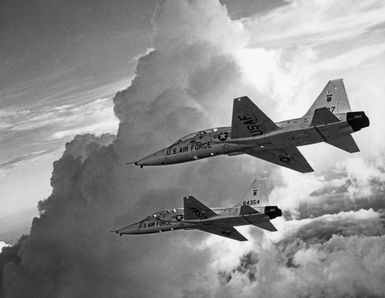
The N-156, first flown in 1959, was the result. A lightweight, supersonic jet fighter designed for simple maintenance and economy of operation. It wasn’t built to be the most complex aircraft in the sky. It was built to be cheap to keep flying.
It became the T-38 Talon. The U.S. Air Force adopted it as a standard trainer. Then the variants went global.
– F-5 Freedom Fighter
– F-5E Tiger II
These versions were sold around the world. Why? Because the operating costs were manageable. For foreign air forces, that economic trade-off mattered more than raw performance specs.
Which Missiles and Drones Did Northrop Supply?
While building the fighters, Northrop did two other things.
1. They built accessories and subassemblies for other aerospace companies.
2. They became the principal American manufacturer of pilotless target drones.
They also supplied guidance systems for tactical and strategic missiles. This turned Northrop into a critical infrastructure player in the defense sector. They weren’t just building planes anymore. They were building the brains and the targets for the entire missile complex.
How the B-2 Spirit Returned to the Flying Wing
Then came 1981. The U.S. government handed Northrop a contract.
The project was the B-2 Spirit.
It went back to John Northrop’s original flying-wing concept. The design that got rejected after WWII finally found its moment. The first flight happened in 1989. It entered operational service in 1993.
That gap between rejection and adoption? That’s where the money and the politics live. The B-2 wasn’t just a plane. It was a validation of a 40-year-old idea that most people thought had died in the 1940s.
From Ferry Boats to F-14s: Grumman’s Naval Legacy
The Grumman side of the equation isn’t just corporate history; it’s a lineage that starts in 1929. Leroy R. Grumman, an American aeronautical engineer, partnered with two others to found Grumman Aircraft Engineering Corporation. They didn’t start with jets. They started with floats. Specifically, devices that let land-based U.S. Navy planes land on water. That humble beginning grew into a half-century of supplying the Navy with critical aircraft.
By the mid-1930s and through World War II, the company’s radial piston-engine fighters were the backbone of carrier operations. The F6F Hellcat is the name to remember here. It wasn’t just good; it was the standard. Alongside torpedo bombers, these planes defined U.S. naval air power until jet engines took over during the Korean War. No other aircraft manufacturer got more praise from the U.S. military during the war. That’s a hard stat to beat.
Then came 1969. Northrop Grumman (then Grumman) landed the contract for the F-14 Tomcat.
- Service Entry: 1973
- Configuration: Twin-engine, variable-wing
- Status: The West’s most advanced and costliest fighter at the time
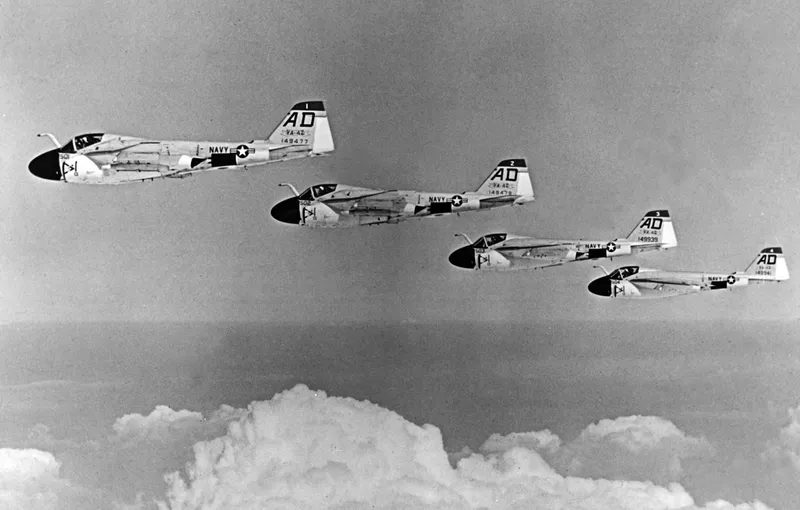
The Tomcat wasn’t just another plane. It was a carrier-based air-superiority fighter that pushed the cost ceiling. But Grumman didn’t stop there. The company built the A-6 Intruder, a small, long-range, twin-engine jet attack aircraft that hit the operational mark in 1963. It also delivered the E-2 Hawkeye in 1964. This twin-turboprop was a first: the first aircraft designed specifically for airborne early-warning surveillance.
The Gulfstream Spinoff and the Moon Connection
You might not realize that the private jet experience you’ve had on a business trip traces back to Grumman. In 1958, responding to demand for turbine-powered executive transports, they introduced the G-159 Gulfstream I. It was a twin-turboprop that evolved into a family of popular business jets. The company kept it for two decades before selling the Gulfstream operation to American Jet Industries in 1978. That entity eventually became Gulfstream Aerospace, now a subsidiary of General Dynamics Corporation.
Why does this matter for understanding Northrop Grumman today? Because it shows a company that could pivot from military contracts to civilian luxury, and from Earth-bound jets to the Moon.
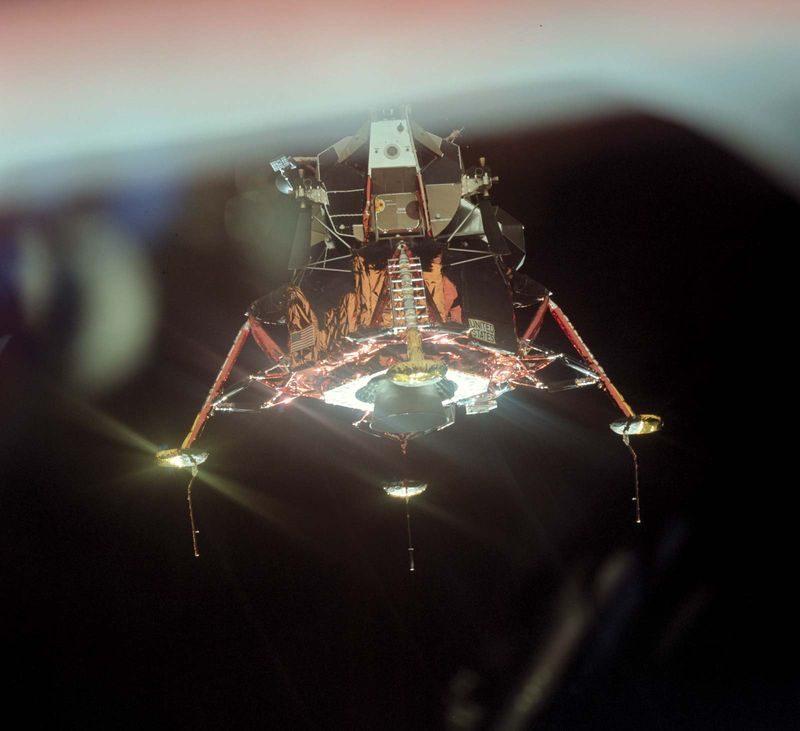
The space link is direct. Grumman designed and built the Apollo Lunar Modules. Those aren’t prototypes or test vehicles. They are the exact craft that carried American astronauts to the surface of the Moon. When you look at Northrop Grumman’s current portfolio, you’re looking at a hybrid of these distinct streams: the fighter pilot’s trust in the Tomcat, the business traveler’s comfort in the Gulfstream, and the astronaut’s safety in the Lunar Module.
Why This Heritage Matters for Modern Defense Contracts
If you’re evaluating defense suppliers or looking at the mechanics of military procurement, this history explains the trust. The F-14 Tomcat wasn’t a gamble. It
Northrop Grumman’s Acquisition Strategy and Portfolio Shifts
The late 1980s saw a slump in new aircraft projects for Grumman. That stagnation invited interest from larger players. Martin Marietta and Northrop both attempted takeovers. Northrop won the bidding war in 1994, creating Northrop Grumman.
This move wasn’t isolated. Two years prior, in 1992, Northrop had bought 49% of LTV’s Vought Aircraft division. By 1994, they purchased the remaining stake. The result was a consolidated defense giant.
The company didn’t stop there.
- 1996: Added Westinghouse Electric’s defense and electronics systems.
- 1997: Acquired Logicon, Inc., a defense IT firm.
- 2000: Sold the commercial aerostructures business to the Carlyle Group. This sale allowed leadership to focus strictly on defense electronics and information technology.
- 2001: Acquired Litton Industries, founded in 1953.
Each step narrowed the focus. The strategy prioritized high-margin defense and IT segments over broader, less profitable commercial aviation components.
Why did they divest the commercial aircraft division? The Carlyle Group purchase in 2000 stripped out the lower-margin aerostructures work. It forced the company to double down on its core competency: advanced defense systems.
The timeline shows a clear pattern. Aggressive consolidation through acquisition, followed by strategic pruning. Northrop Grumman emerged from the 1990s merger as a streamlined entity, shedding legacy commercial assets to sharpen its edge in defense technology.