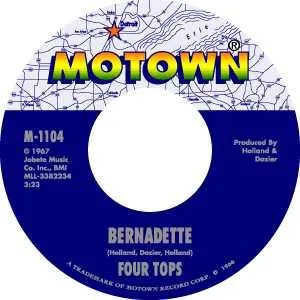
Motown didn’t start as a global juggernaut. It began as a gamble in Detroit, January 1959. Berry Gordy Jr. founded the label, turning it into one of America’s most successful Black-owned businesses. Today, it stands as a landmark in independent music history. The company didn’t just record songs. It defined a sound.
That sound was soul. It dominated the 1960s charts.
The roster read like a history book of American pop. You had the Supremes. The Temptations. Smokey Robinson and the Miracles. Marvin Gaye. The Jackson 5. Lionel Richie and the Commodores. These weren’t just hits. They were cultural fixtures.
The Road to Hitsville
Gordy’s path wasn’t straight. He moved from rural Georgia to Detroit. His family was part of the Great Migration. Hundreds of thousands of African Americans moved North for work. Detroit’s auto plants were the draw.
His parents worked hard. They had faith. They also bankrolled his early attempts in music.
Gordy tried boxing. He served in the Korean War. Then he opened a jazz record store in Detroit. He couldn’t read music. He didn’t need to. He had a gut instinct for what would sell.
Before Motown, he tried to survive as an indie songwriter. He wrote for Jackie Wilson. Marv Johnson. He made very little money. He was on the fringes.
Then he found William “Smokey” Robinson. A high school kid from Detroit. Soothing falsetto. Sharp lyrical sense. Gordy saw potential. He recorded Robinson’s group, the Miracles, for End Records. He also started Jobete Publishing. These moves set the stage.
In 1959, he launched Motown Records. The name came from Detroit’s nickname: Motor City.
Why 1959 Worked
Success didn’t happen in a vacuum. Several factors aligned.
First, big-band swing was dead. It had ruled the Great Depression. Post-WWII, it was passe. Big bands were too expensive. Jazz shifted. Beboppers played for listening, not dancing.
Second, rhythm and blues (R&B) was rising. It came from inner-city neighborhoods. Leaders like Louis Jordan and Lionel Hampton popularized it. Small independent labels recorded it.
The majors ignored it. Columbia. Capitol. Only Decca showed interest in this new energy that would birth rock and roll. This opened a door. A young entrepreneur with an ear for R&B could start a modestly successful indie label.
Third, Black-owned independents were already winning. Peacock Records in Houston by Don Robey. Vee Jay Records in Chicago by the Carter and Bracken families. They had thrived for nearly a decade in R&B and rock and roll.
Gordy wasn’t entering uncharted territory. He was entering a shifting landscape.
Social changes helped. Harry Belafonte produced Odds Against Tomorrow in 1959. It was the first Hollywood film by an African American through his own company. The Brown v. Board of Education decision had just passed. Civil rights activism was gaining momentum.
Black radio was powerful. It marketed directly to Black consumers. This audience had clout. Black record owners could reach them directly.
The Hitsville Machine
By the 1960s, Motown was a titan. It sat alongside the Beatles in popularity.
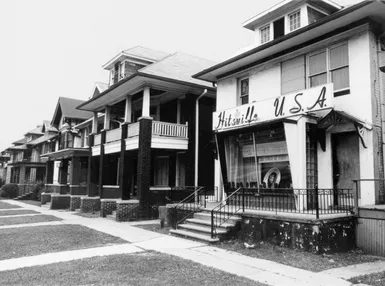
Gordy gathered talent in Detroit. Many had benefited from the city’s public school music programs. He set up shop at 2648 West Grand Boulevard. The address became famous. It was Hitsville.
The two-story house was a studio and headquarters.
The roster was deep. Solo acts like Marvin Gaye. Mary Wells. Stevie Wonder, who was a star as a child and an adult.
Groups were everywhere. The Miracles scored Motown’s first million-selling single, “Shop Around,” in 1960. The Temptations followed. Martha and the Vandellas. The Marvelettes.
Older acts found success too. The Four Tops. The Contours. Junior Walker and the All-Stars.
Some acts weren’t developed by Motown. They arrived later. The Isley Brothers. Gladys Knight and the Pips. They found hit records anyway.
The machine was built.
The Supremes Dominated the Charts
Motown’s Hitsville U.S.A. on West Grand Boulevard in Detroit was where the magic happened. But inside those studios, one act eclipsed all others. The Supremes.
They didn’t just hit it big. They ruled the 1960s.
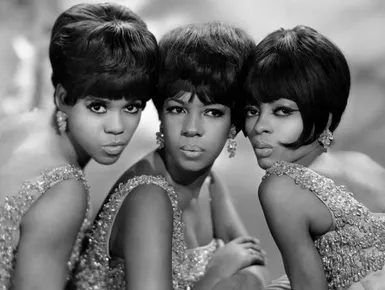
Consider the string. “Where Did Our Love Go” topped the charts in 1964. So did “Baby Love.” And “Come See About Me.” That’s three number-one singles in one year. Then 1965 hit. “Stop! In the Name of Love.” “Back in My Arms Again.” “I Hear a Symphony.” Three more.
It kept going. 1966 brought “You Can’t Hurry Love.”
Total. Seven number-one hits between 1964 and 1966.
No other Motown group matched this. Not the Temptations. Not the Four Tops. The Supremes were the second most successful group of the entire decade. Only the Beatles outpaced them. They remain one of the highest-grossing female groups in history.
The engine behind this machine was Diana Ross. Her lead vocals gave the group a polished, glamorous sheen. That visibility launched her solo career. But at the time, she was the face of a dynasty.
The formula worked. Consistent output. Sharp production. A clear frontwoman.
Other acts tried to copy the sound. Few succeeded. The Supremes had the timing right. They had the hits locked in.
Motown built the platform. The Supremes built the legacy. Diana Ross took it further.
But the group’s peak was a specific window. A few years. A handful of massive singles. After that, the lineup changed. The sound shifted. The streak ended.
That’s how it works. You ride the wave until it breaks.
The Songwriters Who Built the Brand
The hits didn’t just fall from the sky. They were manufactured by a specific group of men who became as famous as the stars singing them. Brian Holland, Lamont Dozier, and Eddie Holland wrote and produced most of the Supremes’ mid-1960s dominance. They were nearly as recognizable as Diana Ross herself. That recognition brought trouble. A dispute over money with Berry Gordy led to a lawsuit. The trio left the company. It was major industry news at the time.
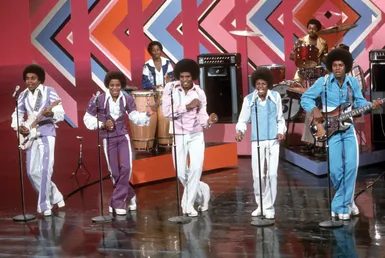
Gordy wasn’t the only creative engine. Smokey Robinson was an important songwriter. So were Sylvia Moy, Norman Whitfield, Mickey Stevenson, Ivy Joe Hunter, and Gordy himself. All of them produced. Some were assigned by Gordy to work with specific acts. Their fame created problems for Gordy, but the machine kept turning. When the Jackson 5 signed in 1969, the team writing their early hits was credited simply as the Corporation. It was a branding decision. It obscured individual names to create a unified sound.
The Funk Brothers and the “Sound of Young America”
The music came from a house band known as the Funk Brothers. They were some of the best nightclub and bar musicians in Black Detroit. Earl Van Dyke handled keyboards. Benny Benjamin and Uriel Jones played drums. James Jamerson anchored the bass. They played a huge role in developing the Motown sound.
It was a branch of soul music. It featured more sophisticated arrangements and orchestration than the grittier Southern soul that flourished in Memphis. Motown brought together R&B, gospel, and pop influences. The goal was to “cross over.” They wanted to move beyond single-genre listeners. They targeted a wide audience. White teenagers were part of that audience.
Motown records were mixed specifically to sound good on car radios. A thumping backbeat made dancing easy for everyone. The company sought to be the “Sound of Young America.” It became it.
The Assembly Line Approach to Hits
Motown was a small company. It had great numbers. But it ran with unmatched efficiency. Gordy prided himself on learning about producing a quality product from a brief stint on the assembly line at an auto plant. He carried that mindset into the studio.
He held rigorous quality control meetings. Only records that could pass the harsh criticism of his assembled brain trust were released. The measures were stringent. As a result, Motown enjoyed the highest hit ratio for its released singles of any record company in history. This happened at the height of its popularity in the mid- to late 1960s.
Gordy had to employ these extraordinary means. A small company has to survive against bigger companies in the popular music business. The efficiency wasn’t just for style. It was for survival.
Artist Development and the Cost of Fame
Artist development was comprehensive. The company acted as equal parts finishing school and academy of popular arts. Acts received elaborate choreography under the tutelage of Cholly Atkins. Young women raised in public housing projects, like the Supremes, were schooled in social graces. Chaperones accompanied the package-tour bus cavalcades. This was standard procedure during the company’s early years as Motown traveled to other parts of the United States.
The strategy worked until it didn’t. Motown enjoyed its greatest success between 1965 and 1968. It dominated the Billboard charts. The company was never quite the force in the 1970s that it was in the ‘60s. It had lost several key performers. It was still a formidable enterprise, however. The Jackson 5, the Commodores, Stevie Wonder, and Diana Ross kept it relevant.
In 1971, Motown released what became, arguably, the most influential soul record ever. Gaye’s What’s Going On. It signaled a shift. The assembly line was cracking. The sound was changing. The young America they once captured was growing up.
From Detroit riots to Hollywood deals
Detroit in the late 1960s wasn’t just loud. It was violent. Race riots tore through the city, creating an unstable environment for business. Berry Gordy didn’t wait for the dust to settle. He moved Motown to Los Angeles in the early 1970s. The shift was strategic. Hollywood offered a new revenue stream.
Filmmaking worked. Mostly. Lady Sings the Blues (1972) was the high point. Diana Ross starred. The film loosely tracked jazz legend Billie Holiday’s life. It proved Motown could cross over beyond record sales.
The corporate shuffle
The 1980s changed the music landscape. Multinational conglomerates bought up smaller labels. Independent operations got squeezed. Gordy struggled to keep pace. The industry wasn’t playing fair anymore.
In 1988, he sold Motown to MCA. That wasn’t the end. MCA later flipped the company to Polygram. Then came Universal Music Group. UMG acquired Polygram in 1998. Motown became part of a massive global machine.
It remained influential. The sound is still unmatched. No one has replicated the classic Motown style since. It retains a primal power. Longevity isn’t guaranteed in this business. Motown kept its pulse.
Reading the record
If you want the full history, start with Nelson George. Where Did Our Love Go? (1985) covers the triumphs and failures. It’s the standard text.
Gerald Early’s One Nation Under a Groove (1995) places Motown in post-WWII cultural context. It’s concise. It explains why the music mattered beyond the charts.
David Morse’s Motown and the Arrival of Black Music (1971) is short. It’s also helpful. It’s an early study. It captures the moment the industry shifted.
For visuals, look at Ben Fong-Torres. The Motown Album (1990) is a pictorial history. High quality. First-rate.
Berry Gordy wrote his own story in To Be Loved (1994). It’s an autobiography. It covers music. It covers magic. It covers memories.
His second wife, Raynoma, wrote Berry, Me, and Motown (1990). It’s interesting. It’s not always accurate. It details her role in the early years.
Dr. Licks wrote Standing in the Shadows of Motown (1989). It focuses on James Jamerson. He was the legendary bassist. The book examines his life and music. It’s insightful.
Otis Williams, from the Temptations, wrote Temptations (1988). It’s a good autobiography. Williams was a founding member. The group was enduring.
Mary Wilson wrote Dreamgirl: My Life as a Supreme (1986). It’s sometimes disputatious. Wilson was a stalwart. Her account adds another layer.
The story doesn’t end with a corporate sale. The sound lingers. The influence persists. The history is complex. The records remain.